
 EN
EN

What Types of Composite Noise Barriers Are Available?
Composite Acoustic Noise Barriers combine both sound absorption and sound insulation functions, making them one of the most widely used and effective solutions for noise control today. The main types can be classified from three perspectives: combination form, structural profile, and core material.
I. Classification by Combination Form
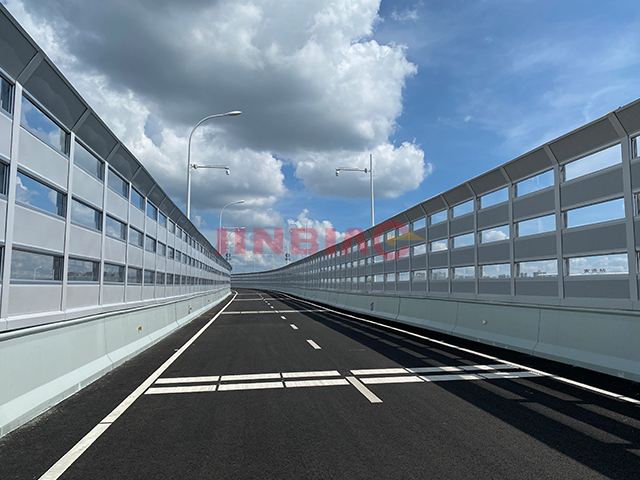
Metal Sound-Absorbing Panel + Transparent Sound-Insulating Panel
This is the most classic configuration. The metal section (micro-perforated panels combined with sound-absorbing insulation) provides both sound absorption and insulation, while the transparent section (PC sheets, acrylic panels, or laminated glass) ensures natural lighting and visibility, achieving an excellent balance between noise reduction and aesthetics.
Fully Metallic Composite Sound-Absorbing Type
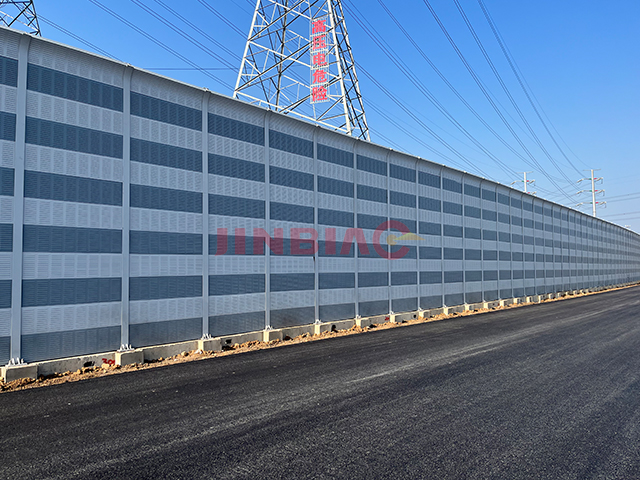
This design uses metal materials throughout. The front side features perforated or louvered panels, with rock wool or glass wool infill, while the rear side consists of a non-perforated metal sheet. It offers high strength, excellent weather resistance, a Noise Reduction Coefficient (NRC) of ≥0.7, and a Sound Transmission Loss (Rw) of ≥30 dB. It is widely used in railway projects.
II. Classification by Structural Profile
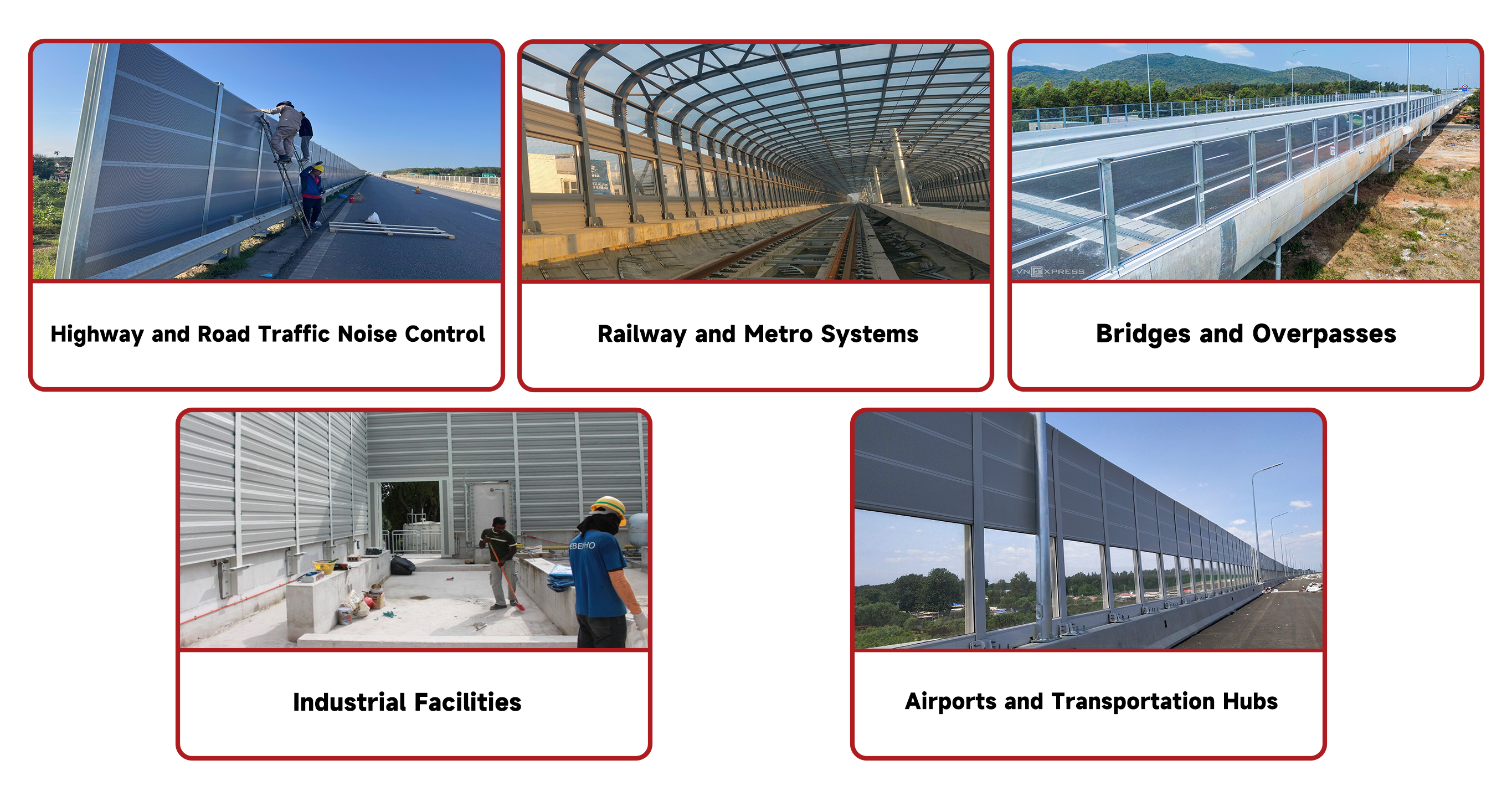
Vertical Type
The barrier panels are installed vertically, featuring a simple structure and convenient installation. This design is suitable for railway embankments and areas with standard noise reduction requirements.
Vertical Curved-Top / Folded-Top Type
The top section is curved or folded into an arc or serrated shape, increasing sound wave diffraction loss. Compared with barriers of the same height, this design can improve noise reduction performance by approximately 3–5 dB.
Semi-Enclosed / Fully Enclosed Type
Featuring a U-shaped or portal-frame enclosure structure, this design can achieve a noise reduction effect of ≥30 dB. It is particularly suitable for sensitive areas such as hospitals, schools, and densely populated residential zones. Transparent roof panels are typically installed to provide daylight, while ventilation silencers are required to maintain airflow.
III. Classification by Core Material
Metal-Based Composite Type
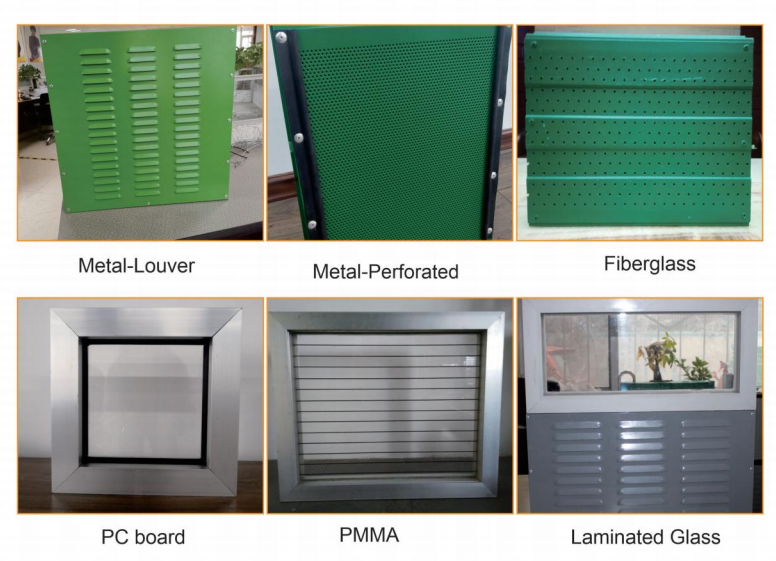
Constructed with galvanized steel sheets or aluminum alloy panels and filled with rock wool or glass wool. Protected by hot-dip galvanizing and powder coating, these barriers offer a service life of more than 15 years and provide noise reduction of 10–25 dB.
Transparent Composite Material Type
Combines PC sheets, acrylic panels, or laminated glass with metal sound-absorbing units. With light transmittance exceeding 85%, excellent impact resistance, and sound insulation performance of 8–15 dB, this type is ideal where visibility and aesthetics are important.
Concrete-Based Composite Type
Utilizes lightweight concrete or ceramsite concrete backing panels combined with sound-absorbing surface layers. With an A1 fire-resistance rating and a service life exceeding 30 years, it is particularly suitable for heavy-haul railways and regions exposed to high wind loads, providing noise reduction of 15–30 dB.
IV. Classification by Panel Appearance
Louvered Panel Type
A classic louvered design that promotes airflow and minimizes dust accumulation.
Micro-Perforated / Perforated Panel Type
Features small perforation diameters (micro-perforations as small as 0.8 mm), offering excellent high-frequency sound absorption performance and a refined appearance.
Corrugated Panel Type
The panel surface is pressed into a corrugated profile, increasing structural strength and expanding the contact area for sound wave interaction.
V. Customized Solutions
Composite acoustic noise barriers can be customized to meet specific project requirements. Options include adjusting the proportion of metal and transparent sections, selecting different material combinations (such as aluminum alloy + PC sheet + concrete), and customizing module dimensions (lengths of 2000 mm, 3000 mm, or 4000 mm, with heights ranging from 2000 mm to 5000 mm).
These flexible configurations make them suitable for high-speed railways, conventional railways, urban transit systems, and a wide range of climatic conditions.
For detailed technical specifications or professional selection recommendations, please feel free to contact us.