
 EN
EN

Core Functions and Product Value of Railway Noise Barriers
Every day, high-speed trains and metro systems pass by at great speed, while the noise barriers standing alongside the tracks silently shield nearby residents from excessive noise. As railway networks continue to expand rapidly, the impact of train operation noise on surrounding communities and the ecological environment has attracted increasing attention. As a core facility for railway noise control, noise barriers are now widely used in high-speed railways, conventional railways, and urban rail transit systems.
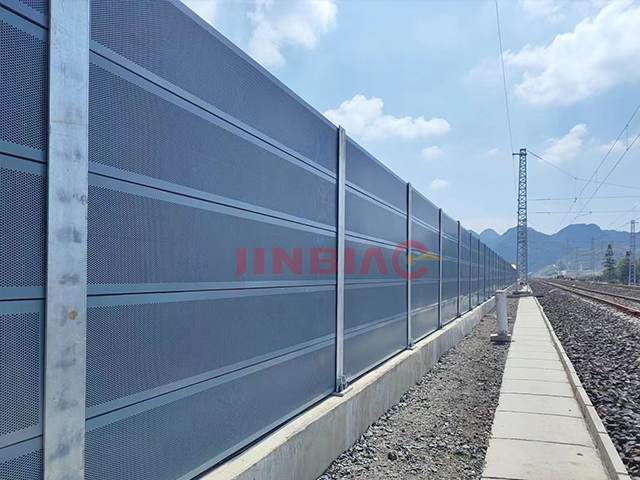
I. Core Noise Reduction Functions
Noise barriers effectively reduce train noise through two mechanisms:
Sound Insulation Blocking — A barrier is installed between the sound source and the receiver, obstructing sound wave transmission and creating a “sound shadow zone” behind the barrier, significantly reducing noise in the protected area.
Sound Absorption — Tiny perforations are arranged on the train-facing side, with high-density sound-absorbing materials installed inside. Sound waves entering the material are repeatedly dissipated within the microporous channels and converted into heat energy.
High-speed railway projects commonly use micro-perforated aluminum noise barriers. Their surfaces are densely covered with micro holes and filled with fire-resistant sound-absorbing materials. Combined with curved structural designs, the overall noise reduction coefficient exceeds 0.7, reducing train noise by approximately 20 dB.
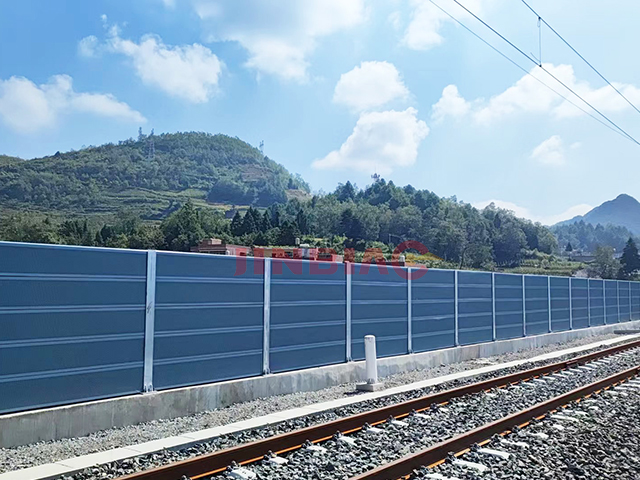
II. Multiple Protective Functions
Safety Protection: Noise barriers prevent people and animals from entering railway operation zones. Fully enclosed barriers use anti-glare coatings to reduce light pollution.
Ecological Protection: Railways passing through nature reserves can reduce acoustic and light disturbance through noise barriers.
Dust Suppression: In certain sections, noise barriers can suppress dust dispersion and improve air quality along the route.
III. Comprehensive Benefits
Improved Living Quality: Hospitals, schools, and residential communities are often located along railway corridors. Noise barriers help meet noise control standards and improve residents’ quality of life.
Reduced Maintenance Costs: High-quality noise barriers use composite structures of metal panels and sound-absorbing cores with hot-dip galvanized and powder-coated surfaces, offering excellent weather resistance and a service life exceeding 15 years.
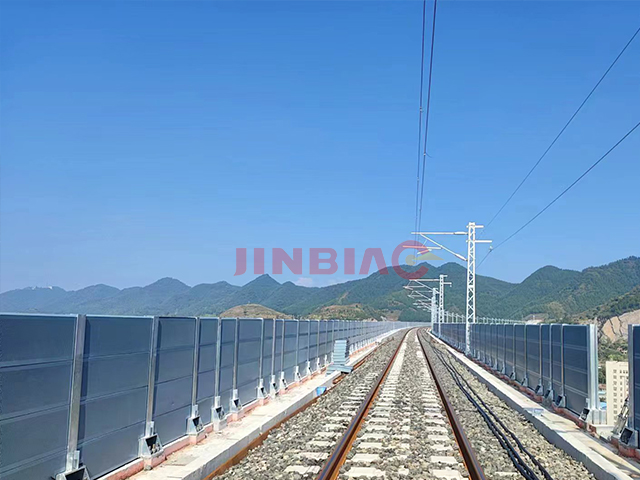
IV. Environmental Adaptability
Weather and Corrosion Resistance: Dual anti-corrosion systems resist rain, snow, sandstorms, and UV exposure, ensuring stable long-term performance.
Structural Safety: The structure meets wind resistance and seismic standards, with tightly sealed joints ensuring stability under train-induced wind pressure.
Conclusion
Railway noise barriers have evolved from simple noise reduction facilities into comprehensive environmental protection systems integrating acoustic protection, safety assurance, and ecological conservation.