
 EN
EN
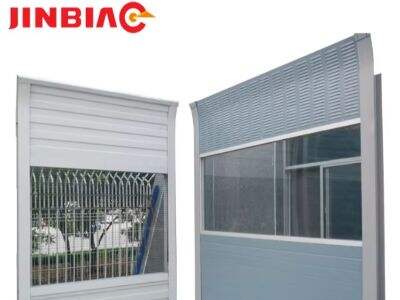
Noise barrier panels are vital components for limiting unwanted noise from places such as highways and railways. When those panels are joined together, there will be joints — the areas where two panels meet — that must be treated with care. If the joints are not well done, noise can seep through, or the panels might have a short life. At Jinbiao, we would like to assist you with getting a good understanding of how these panels are joined so the Noise Barrier will serve it's purpose and remain strong throughout for years. I’d rather not just be putting panels next to each other; I want to ensure that the connection is strong, secure and will last through the weather and years of time. This post discusses important elements on jointing requirements and how to successfully accomplish it every single time.
HSR Noise Barrier Panel Jointing Differences
When wholesale buyers purchase a lot of noise barrier panels, they should understand that jointing is among the essential steps in the entire process. The joints between the panels are the areas where they connect, and they need to fit perfectly without gaps or a soft spot. Picture putting two puzzle pieces together, but with a space between them. Sound can pass through easily. To work well for blocking noise, every joint must be sealed tight. Jinbiao’s panels have exact straight edges to fit tightly together. But simply having good panels is not sufficient. And whatever materials you use to connect your panels such as caulk or screws — should also be of high quality.
Poor jointing Some times its the case of buyers forgetting that bad jointing can lead to loose and shifting panels over time. This means that noise gets through or the structure looks bad. So jointing rules dictate screw tightness, sealant thickness and how to shield joints from weather. Buyers in bulk who stick to these rules end up spending less money because their HSR Noise Barrier have a more extended life and perform better. It’s a small detail, yes, but jointing work determines exactly how well the entire noise barrier panel system will function. Jinbiao is well aware of that after years of producing the panels and helping customers get them installed correctly.
How to Get Flawless Connection in HSR Noise Barrier Panels for Efficiency?
It’s not easy to make joints just right. It requires a bit of skill, the proper tools and some good materials. First, the panel meeting surfaces must be clean and dry. Sealants will not adhere well where there is dust or water. Jinbiao’s crew always cleans panel edges prior to beginning jointing so as not to leave any leaks. Then, the appropriate jointing method must be selected based on panel design and application area. For instance, rubber gaskets are ideal for joints that flex a little bit in the wind. But if the panels are particularly, well, heavy-duty, metal fasteners may be required just to keep everything in place.
When sealing, you do not want too much or too little. Too little sealant results in small holes for noise or water to enter; too much can cause joints to become sloppy and can crack when drying. That also makes the joints look tidy, which is important in spots where people view the noise barrier insulation up close.
Typical HSR noise barrier panel jointing problems and how to avoid them
The seaming of the panels is very critical in high speed rail (HSR) noise barriers. Noise barrier panels are like giant puzzle pieces, snapped one next to the other, designed not to block noise too much from a train. But if the joints — one panel to another, or where panels meet a floor or ceiling or wall — aren’t done right, they can cause problems. Gaps in between the panels are also a frequent occurrence. With even the smallest gap, noise will slide through the area and make it less effective as a barrier. Another problem is poor sealing. Without using the proper materials to seal the joint, water can find its way in, and do damage over time. And if the panels are not spaced properly, the barrier could appear uneven and might not block sound evenly.
The Effect of Jointing on the Sound Insulation Performance of HSR Noise Barrier Panels
How noise barrier panels are connected determines their ability to halt sound. Sound can creep in through minuscule cracks, holes or gaps where panels come together. Though each panel may do a great job of blocking sound, the joints between them can create weak points. Sound waves easily move through barriers when they aren’t sealed, meaning that wall joints aren’t 100% tight. That’s why jointing is as important to the panels themselves.
Jinbiao understands that a sound barrier is only as strong as its weakest link. When panels are butted up against each other in strong, well-designed joints, the barrier becomes a nearly impervious wall. This prevents the sound of the trains from entering, meaning that on the other side of the barrier it’s quieter and more peaceful. Special sealing materials at the joints add extra protection. These substances absorb vibration and prevent sound waves from slipping through.