
 EN
EN

Industrial Noise Barriers for Factories and Manufacturing Facilities
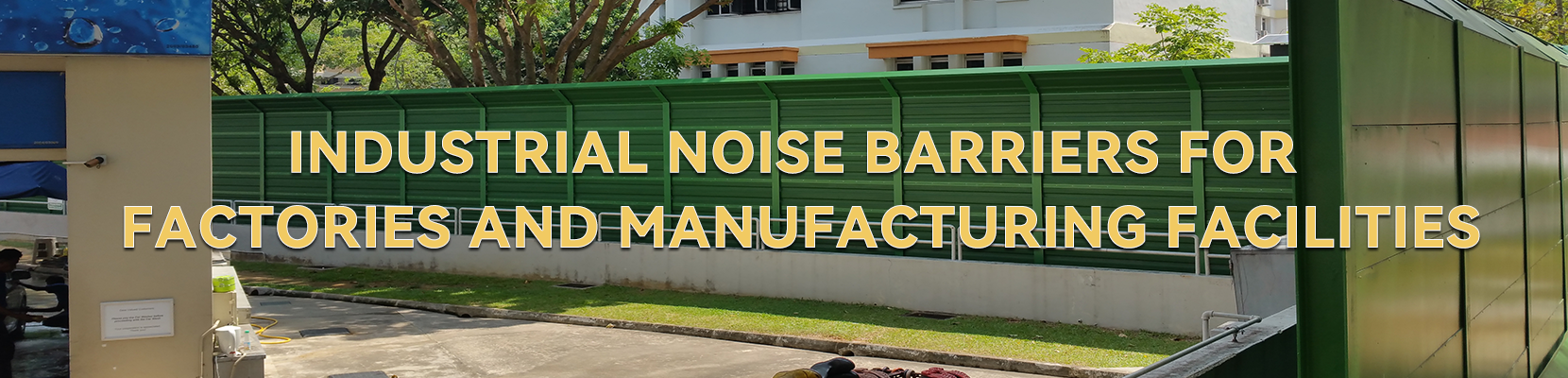
During factory and manufacturing operations, noise levels often exceed 90 dB. This not only damages workers' hearing but can also lead to complaints from nearby residents and even fines for companies that fail to comply with environmental noise regulations. As a professional noise barrier manufacturer, we provide cost-effective, durable, and compliant noise control solutions for various industrial applications.
Our industrial noise barriers are primarily manufactured from two materials: galvanized steel panels and aluminum panels.
Why Choose Galvanized Steel and Aluminum for Noise Barriers?
The effectiveness of a noise barrier depends on its surface density (mass law), sound absorption performance, and weather resistance. Galvanized steel and aluminum each offer unique advantages, making them suitable for different industrial environments.

Product Structure: Perforated Panels + Acoustic Core Material
Our noise barriers are not solid panels. They feature a composite structure that combines both sound absorption and sound insulation functions.
Front Panel (Noise Source Side)
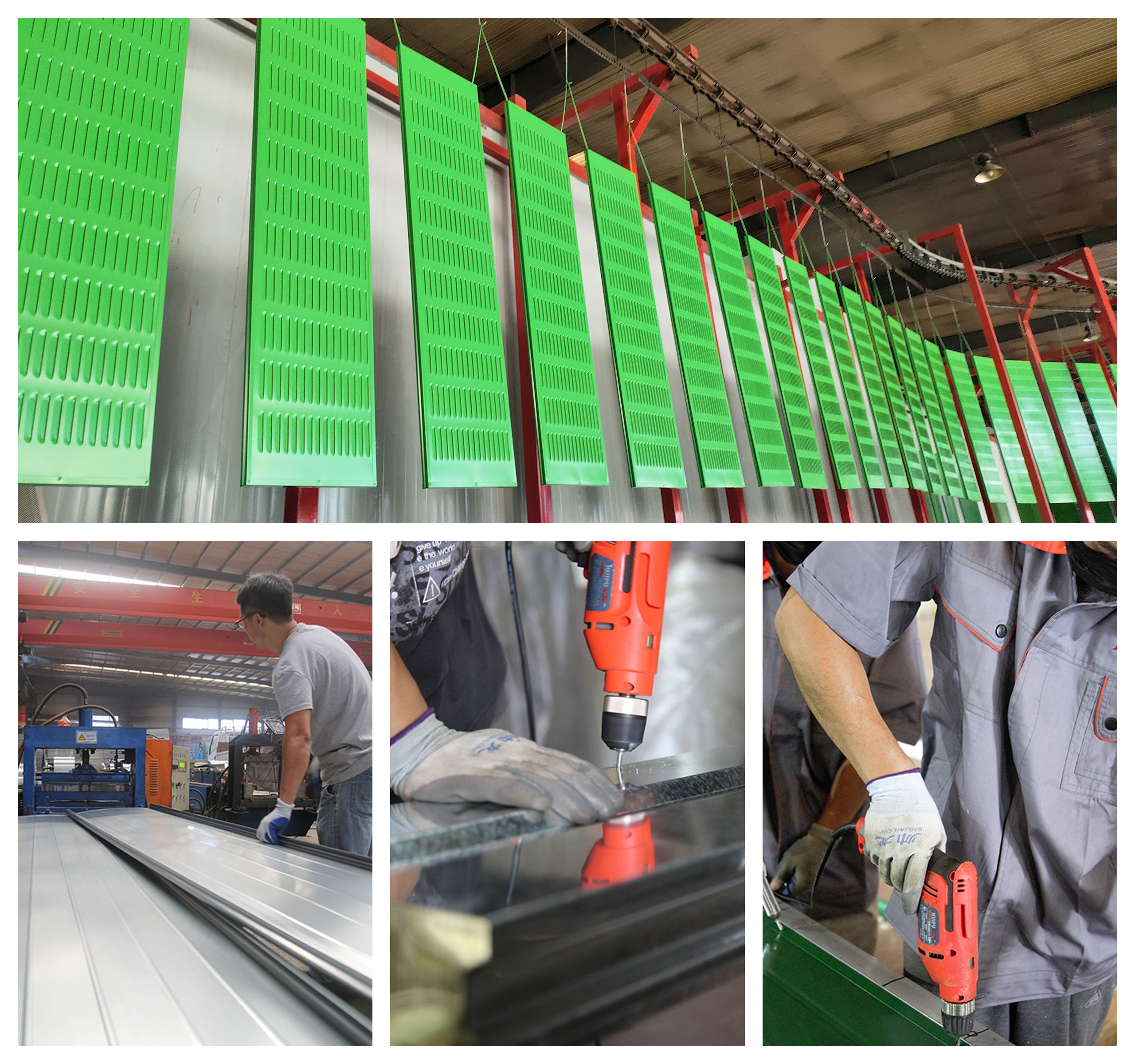
Made from galvanized steel or aluminum sheets with precision perforations (hole diameter: 2–3 mm, perforation rate: 20%–30%). Sound waves enter the perforations and are absorbed by the acoustic core material.
Acoustic Core Material
Filled with Class A non-combustible sound-absorbing materials such as:
- Rock wool
- Glass wool
- Polyester fiber
The thickness can be customized from 50 mm to 150 mm depending on the required noise reduction performance.
Rear Panel (Optional)
The rear panel can be either:
- Solid galvanized steel sheet (non-perforated)
- Perforated aluminum panel
It provides structural strength and enhances overall sound insulation performance.
Frame and Sealing System
Constructed with galvanized steel frames or aluminum alloy frames. All joints are equipped with rubber sealing strips to prevent sound leakage.
With this structure, the product can achieve:
- Noise Reduction Coefficient (NRC): Above 0.85
- Sound Transmission Class (STC): Up to 15–30 dB depending on panel thickness
This ensures effective sound absorption without excessive reflection and sound insulation without leakage.
Key Advantages
Durable and Weather Resistant
Galvanized steel panels can be coated with PVDF or polyester powder coatings to withstand acid rain, dust, and mechanical impacts.
Aluminum panels naturally resist corrosion and are particularly suitable for humid environments or facilities exposed to salt spray and chemical gases, such as:
- Electroplating plants
- Fertilizer factories
- Chemical processing facilities
Flexible Solutions for Different Noise Frequencies
Low-Frequency Noise (Below 125 Hz)
Examples:
- Large stamping presses
- Diesel engines
Recommended configuration:
- 1.5–2.0 mm galvanized steel panels
- 100 mm or thicker rock wool core
The higher mass effectively blocks low-frequency sound transmission.
Mid- and High-Frequency Noise
Examples:
- Industrial fans
- Conveyor systems
- Cutting machines
Recommended configuration:
- 0.8–1.2 mm aluminum panels
- 50–80 mm glass wool core
This combination offers lightweight construction and excellent sound absorption efficiency.
Modular Design and Easy Installation
Standard panel dimensions include:
- Width: 500–1000 mm
- Height: 2000–4000 mm
Panels can be installed using:
- Bolted connections
- H-section steel posts
Aluminum barrier modules can often be handled by a single worker, while galvanized steel modules generally require only two workers. No special lifting equipment is necessary.
When production lines are reconfigured, the barriers can be dismantled and reassembled without material waste.
Fire Safety
All metal components are non-combustible. Combined with Class A rock wool cores, the system complies with:
- OSHA requirements
- NFPA standards
- GB 8624 fire safety standards
In the event of a fire, the barriers will not release toxic smoke or contribute to flame spread.
Typical Applications
Factory Boundary Noise Control
A 4-meter-high galvanized steel noise barrier can be installed along the factory perimeter wall. Using solid reinforced rear panels, the system effectively blocks noise transmission toward residential areas.
In one project, measured boundary noise levels were reduced from 72 dB to 55 dB, meeting local residential area noise standards.
Cooling Tower Noise Reduction
Perforated aluminum noise barriers are widely used around cooling towers because they:
- Resist moisture and corrosion
- Maintain an attractive appearance
- Allow adequate ventilation
Key Design and Installation Considerations
Eliminate Gaps
All gaps between panels and between the barrier and the ground must be sealed using acoustic sealant or rubber gaskets.
Even a gap area of just 1% can reduce overall noise reduction performance by 10–15 dB.
Ensure Sufficient Height
The top of the noise barrier should extend above the direct line of sight between the noise source and the receiver.
Where height restrictions exist, a 45-degree absorptive overhang can be added to the top, providing the equivalent noise reduction benefit of approximately one additional meter of barrier height.
Correct Orientation
The perforated sound-absorbing surface should always face the noise source to prevent sound reflection back into the facility.
Where both sides of the barrier are exposed to noise sources, a double-sided perforated design is recommended.
Seal the Base
To prevent sound diffraction beneath the barrier, the base should either:
- Be embedded approximately 200 mm into a concrete foundation, or
- Be fitted with a rubber acoustic skirt seal
Conclusion
For factory and manufacturing noise control projects, galvanized steel and aluminum noise barriers have proven to be reliable solutions through extensive engineering applications.
- Galvanized steel barriers offer superior strength and cost efficiency, making them ideal for permanent installations and heavy industrial environments.
- Aluminum barriers provide lightweight construction and exceptional corrosion resistance, making them ideal for harsh environments and applications requiring frequent modifications.
If you are looking for a customized industrial noise barrier solution for your facility, feel free to contact us for detailed technical specifications, engineering recommendations, and sample testing data.