
 EN
EN

Railway Noise Barrier Solutions
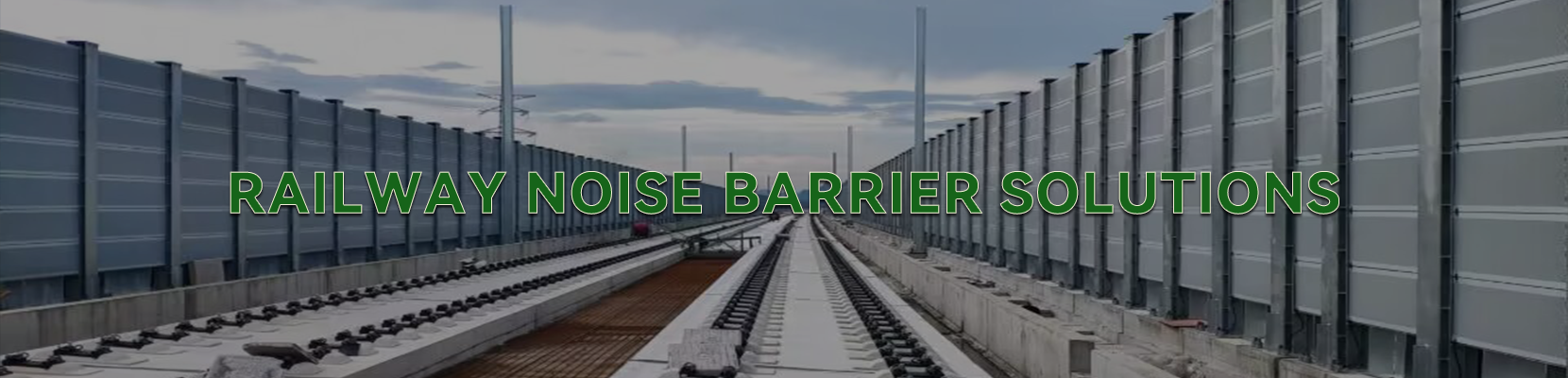
As railway networks continue to expand, controlling environmental noise has become an important part of modern rail infrastructure. Noise generated by trains can affect nearby residential areas, schools, hospitals, and commercial buildings, making railway noise barriers an essential solution for reducing noise pollution and meeting environmental regulations.
Hebei Jinbiao provides customized railway noise barrier solutions for high-speed railways, conventional railways, freight corridors, metro systems, and railway bridges. Our barriers are designed to deliver reliable noise reduction, long service life, and excellent structural performance in demanding railway environments.
Why Railway Noise Barriers Are Needed
Railway noise is mainly generated by:
- Wheel and rail interaction
- High-speed aerodynamic noise
- Traction motors and braking systems
- Rail switches and crossings
- Freight train operations
In many locations, railway noise can exceed acceptable environmental limits, especially in densely populated urban areas. Properly designed railway noise barriers help reduce noise transmission and improve the quality of life for nearby communities.
How Railway Noise Barriers Work
Railway noise barriers reduce sound through a combination of sound insulation and sound absorption.
Sound Blocking
High-density metal panels block the direct path of sound waves between the railway and surrounding areas.
Sound Absorption
Perforated panels combined with sound-absorbing materials absorb noise energy and reduce sound reflection.
Noise Path Interruption
By increasing the distance sound must travel over the barrier, the amount of noise reaching nearby receivers is significantly reduced.
Depending on project conditions, railway noise barriers can typically reduce noise levels by 10–20 dB.
Railway Noise Barrier Structure
Our railway noise barriers generally consist of three main components:
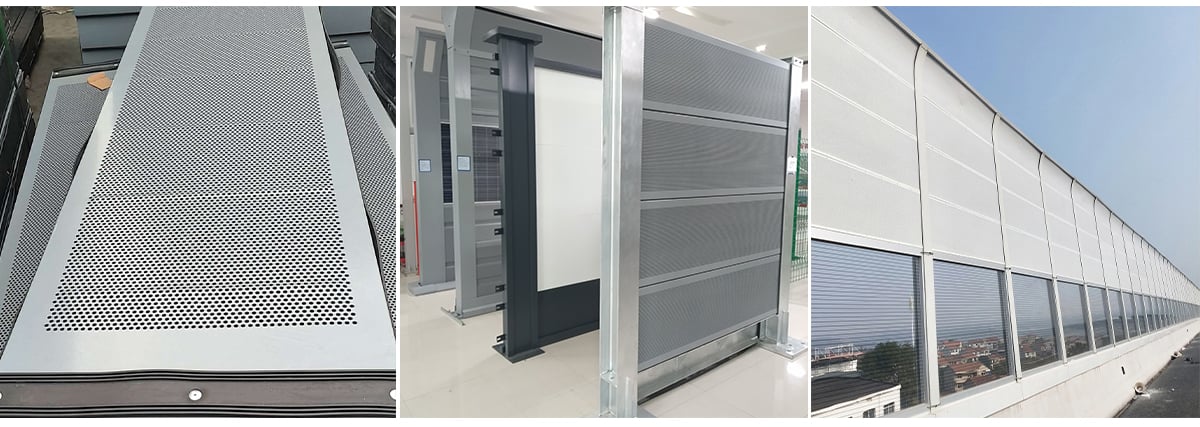
Perforated Front Panel
Made from galvanized steel or aluminum, the perforated surface allows sound waves to enter the acoustic core.
Acoustic Core Material
Filled with non-combustible sound-absorbing materials such as:
- Rock wool
- Glass wool
- Polyester fiber
The core thickness can be customized according to the required acoustic performance.
Rear Panel and Support Structure
The rear panel enhances sound insulation and structural strength, while hot-dip galvanized steel posts and foundations ensure stability under wind loads and train-induced vibrations.
Types of Railway Noise Barriers
Metal Noise Barriers
The most widely used solution for railway projects.
Advantages:
- Excellent acoustic performance
- High durability
- Cost-effective
- Suitable for most railway applications
Transparent Noise Barriers
Manufactured from acrylic or polycarbonate panels.
Benefits:
- Maintain visibility
- Improve aesthetics
- Ideal for bridges and urban rail corridors
Combined Noise Barriers
A combination of metal acoustic panels and transparent sections, providing both effective noise reduction and an attractive appearance.
Bridge Noise Barriers
Specially designed for railway bridges and elevated structures, featuring lightweight construction and high wind resistance.
Typical Applications
Our railway acoustic barriers are widely used in:
High-Speed Railways
Reducing aerodynamic and rolling noise generated by high-speed trains.
Freight Railways
Controlling locomotive and freight operation noise near industrial and residential areas.
Urban Transit Systems
Protecting nearby communities from metro and commuter rail noise.
Railway Bridges and Viaducts
Providing noise mitigation solutions for elevated rail structures.
Railway Stations and Maintenance Areas
Reducing operational noise and improving the surrounding environment.
Key Advantages of Hebei Jinbiao Railway Noise Barriers
Excellent Acoustic Performance
- Noise Reduction Coefficient (NRC) up to 0.85
- Noise reduction of up to 20 dB
- Effective sound absorption and insulation
Long Service Life
- Hot-dip galvanized steel structures
- Corrosion-resistant materials
- UV-resistant surface treatments
- Designed for over 20 years of service
Custom Engineering Support
Our team can provide:
- Acoustic calculations
- Structural design
- Wind load analysis
- Shop drawings
- Installation guidance
Flexible Customization
Available in various:
- Heights
- Lengths
- Colors
- Materials
- Acoustic configurations
Design Considerations
To achieve optimal performance, several factors should be considered during project design:
Barrier Height
The barrier should extend above the direct line of sight between the train and the receiver.
Structural Strength
Railway barriers must withstand strong winds, train-induced pressure waves, and long-term vibration.
Foundation Design
Foundation requirements depend on soil conditions, barrier height, and local wind loads.
Maintenance Access
The design should allow convenient inspection and maintenance of railway infrastructure.
Why Choose Hebei Jinbiao
Hebei Jinbiao has extensive experience supplying noise barriers for railways, highways, bridges, and industrial projects worldwide. We provide complete solutions from design and manufacturing to installation support.
Our advantages include:
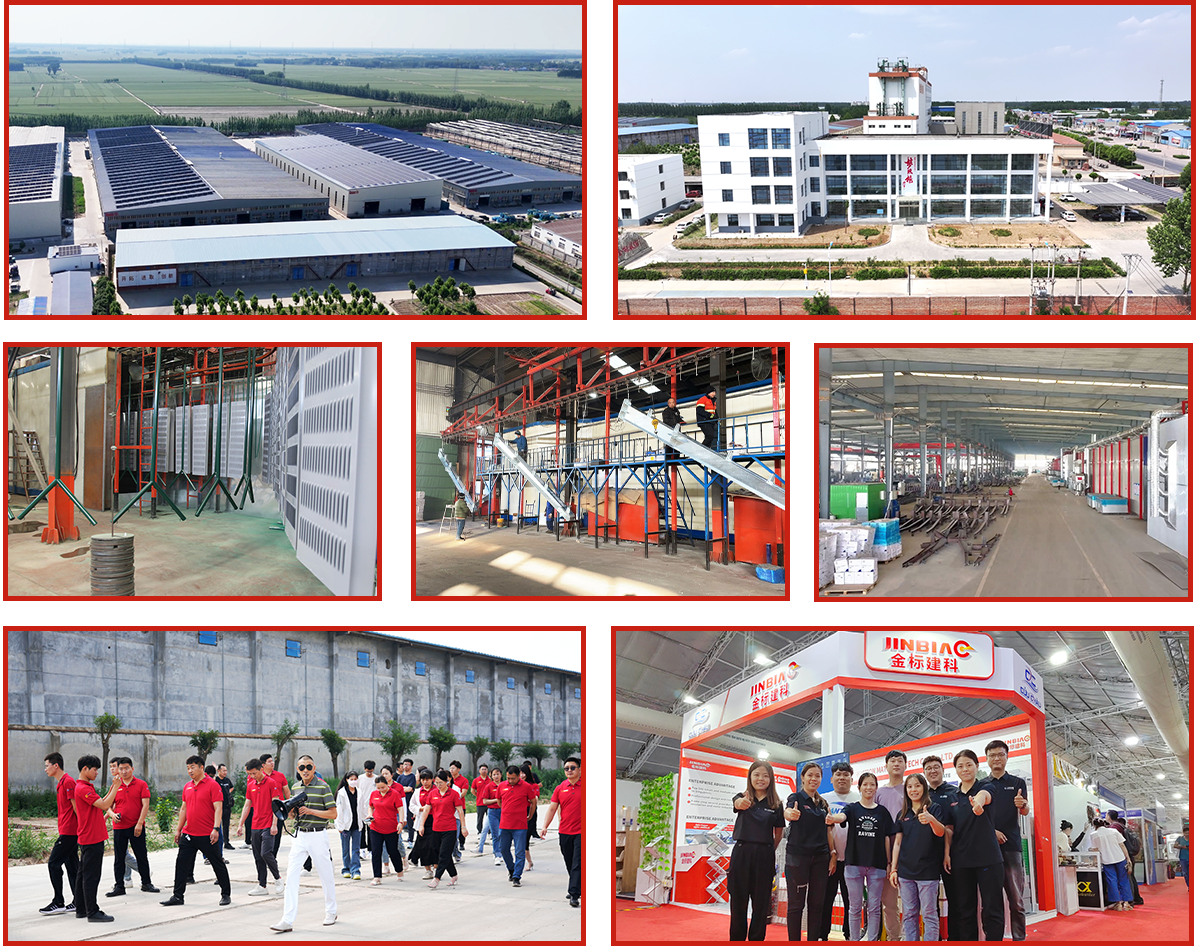
- Professional manufacturing facilities
- Strict quality control
- Fast production and delivery
- Customized engineering solutions
- Global project experience
Whether you require standard railway acoustic panels or a fully customized railway noise barrier system, our team can provide a solution tailored to your project's technical and environmental requirements.
Request a Free Railway Noise Barrier Proposal
If you are planning a railway noise control project, contact Hebei Jinbiao today. Send us your drawings, specifications, or project requirements, and our engineers will provide a customized railway noise barrier solution along with technical recommendations and competitive pricing.