
 EN
EN

What Is an Anti-Glare Fence and How Does It Improve Highway Safety?
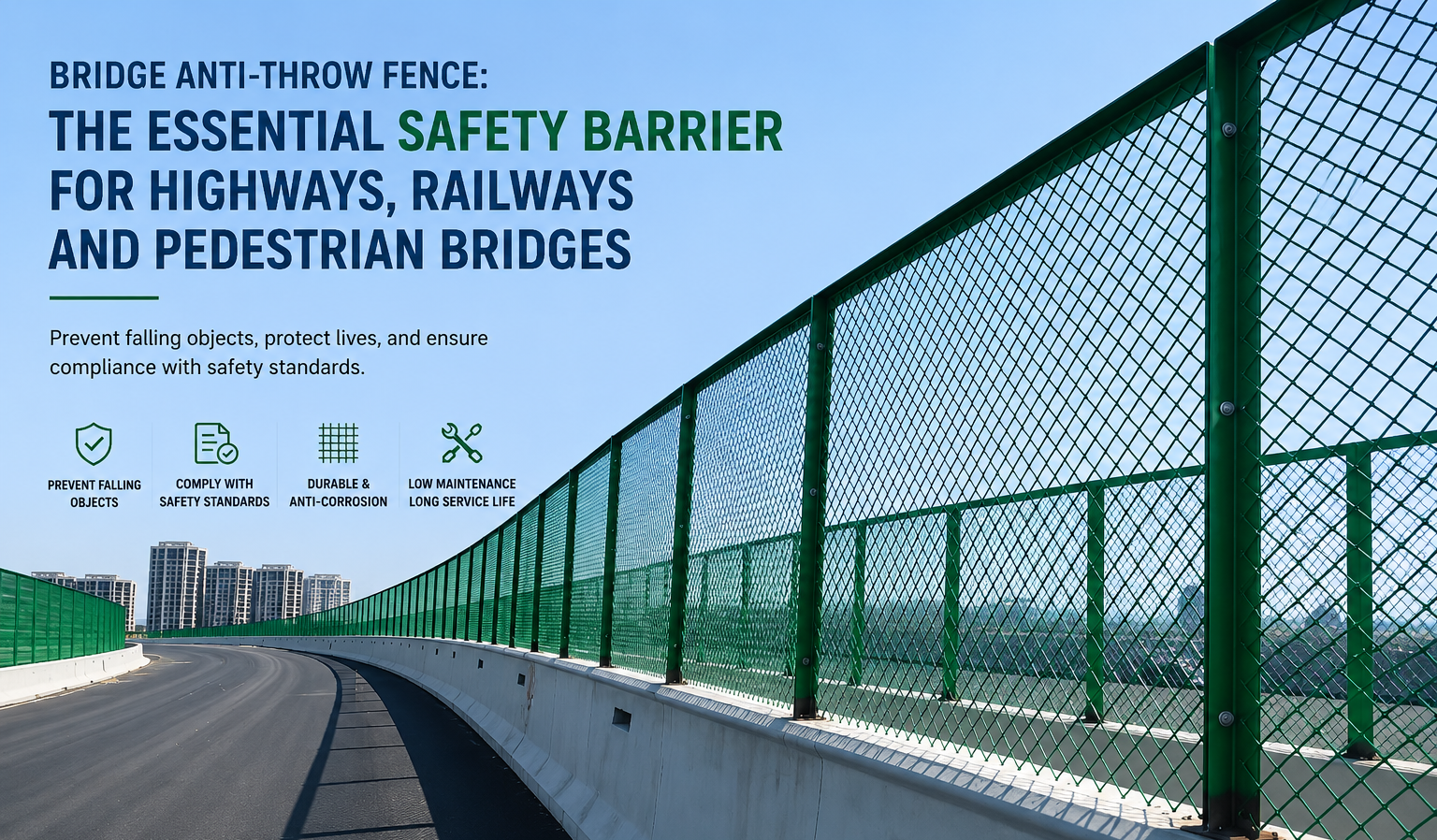
A bridge anti-throw fence, also known as a bridge anti-fall fence or bridge protective mesh, is a safety protection system installed on both sides of bridges, overpasses, and pedestrian bridges. It is typically manufactured from low-carbon steel wire or steel tubes, which are woven or welded together and treated with anti-corrosion finishes such as hot-dip galvanizing, powder coating, or PVC coating to ensure long-term durability and service life.
Why Is a Bridge Anti-Throw Fence Necessary?
﹥Core Purpose: Prevent Falling Objects and Protect Areas Below
The primary and most important function of a bridge anti-throw fence is to prevent objects from being thrown or accidentally falling from bridges, thereby protecting people, vehicles, and infrastructure below.
﹥Protecting Traffic Beneath the Bridge
For bridges crossing expressways, urban highways, railways, and other major transportation corridors, anti-throw fences effectively prevent debris, litter, or objects dropped from pedestrians or vehicles from falling onto the traffic lanes below, reducing the risk of serious accidents.
﹥Protecting Pedestrians and Public Facilities
For bridges spanning sidewalks, public spaces, or densely populated areas, anti-throw fences help prevent injuries and property damage caused by falling objects.
﹥Regulatory Requirements: Compliance with National Standards
Installing bridge anti-throw fences is not only a safety measure but also a requirement under national bridge design regulations.
According to the Code for Design of Urban Bridges (2019 Edition), bridges crossing important transportation routes must be equipped with anti-throw protection systems. The main technical requirements include:
| Installation Location | Minimum Fence Height | Maximum Mesh Opening Size |
| Crossing High-Speed Railways | Not less than 2.5 m | Not greater than 20 mm × 20 mm |
| Other Applications (e.g., Expressways, Urban Highways) | Not less than 2.0 m (recommended) | Not greater than 50 mm × 100 mm |
In addition, the standard requires that anti-throw fence designs consider factors such as structural strength, aesthetics, durability, and harmony with the surrounding environment.
Long-Term Safety: Regular Inspection and Maintenance
As bridge anti-throw fences are continuously exposed to outdoor conditions, they may experience weathering, corrosion, loosening, or damage over time due to wind, rain, sunlight, and other environmental factors.
Therefore, regular inspections and maintenance are essential. Any damaged components should be repaired or replaced promptly to ensure the fence continues to provide reliable protection throughout its service life.
Conclusion
By creating a physical barrier that prevents objects from falling from elevated structures, bridge anti-throw fences effectively eliminate the risks associated with falling debris. They serve as a vital “aerial safety barrier”, protecting vehicles, pedestrians, and public infrastructure while enhancing overall transportation safety and compliance with regulatory standards.