
 EN
EN

Can the Color of Noise Barriers Be Customized?
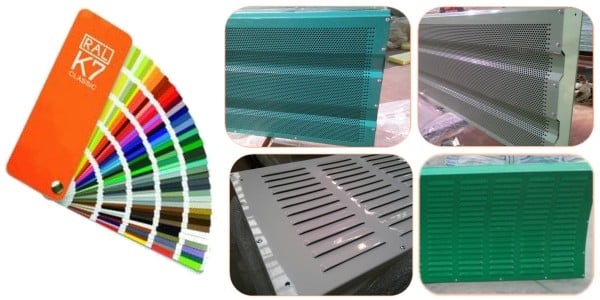
Along railways and highways, noise barriers are not only noise reduction facilities, but also part of the surrounding landscape. Many customers ask during procurement: Can the color of noise barriers be customized according to our requirements? The answer is yes.
I. Colors Can Be Fully Customized
The appearance color of noise barriers can be fully customized. Relevant industry standards specify that the surface color of acoustic components may be selected according to the purchaser’s requirements, provided that the color does not interfere with railway visual signals.
From high-speed railway lines to highways, from urban viaducts to industrial parks, the colors of noise barriers can be flexibly customized according to project requirements and landscape design needs, including solid colors, combined colors, and multi-color schemes.
II. Commonly Used Colors
Although customization is supported, practical engineering projects usually follow certain color selection principles. Low-saturation colors that blend easily with the environment are the most commonly used.
• Green:
One of the most popular colors, mainly grass green and dark green. It is suitable for highways, expressways, bridges, and similar applications. Green helps reduce driver visual fatigue and blends naturally with the surrounding environment.
• Gray:
Another mainstream color series with various shades of gray. It is resistant to visible dust accumulation and creates less visual impact, making it suitable for industrial and municipal environments such as chemical plants, power plants, and urban roads.
• Blue:
Mainly lake blue and light blue, commonly used for color steel plate noise barriers. It matches sky and waterfront environments well, creating a fresh visual effect.
• White:
Suitable for urban sections with high landscape requirements, offering a clean and bright appearance.
In addition, yellow and red can be used as accent colors, while multi-color schemes are often applied in special locations such as kindergartens and schools.
III. What Standards Are Used for Color Customization?
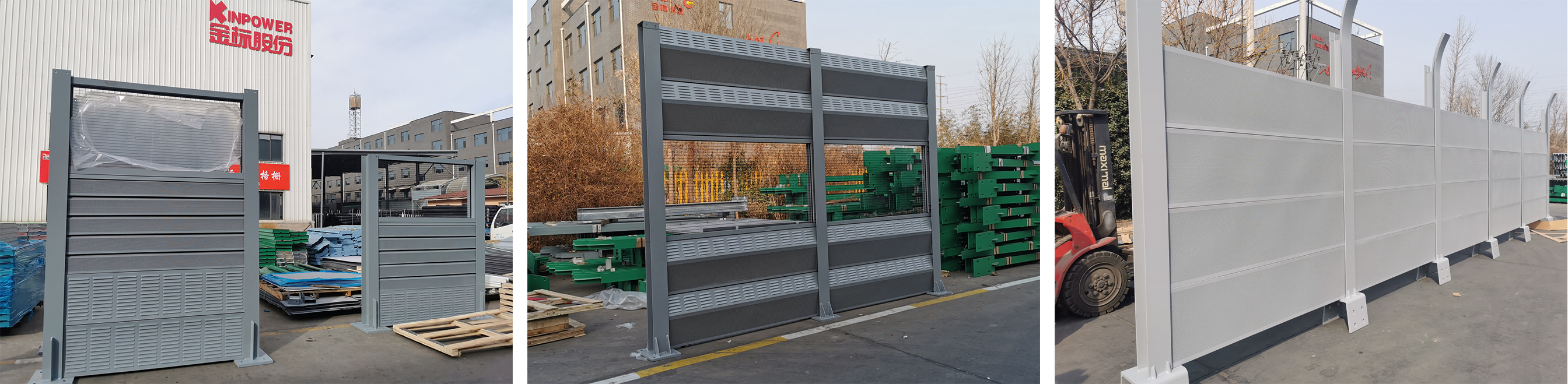
Noise barrier color customization is based on mature international color card systems. The most commonly used system in the industry is the RAL color chart, which uses numerical codes to accurately define color hue, brightness, and saturation.
Common RAL color codes such as RAL6029 (green), RAL5017 (blue), RAL7042 (gray), and RAL9010 (white) can all be specified during procurement.
For example, in the 2023 noise barrier procurement project of Gansu Yuanfeng Transportation, the powder coating colors were specifically designated as RAL7001 and RAL6029, demonstrating the widespread application of the RAL color system in engineering projects.
In addition to RAL, national standard color cards and Pantone color systems can also be supported to meet personalized color matching requirements.
IV. How Are the Colors Applied?
The colors of noise barriers are achieved through coating processes. The two mainstream methods are:
Electrostatic Powder Coating:
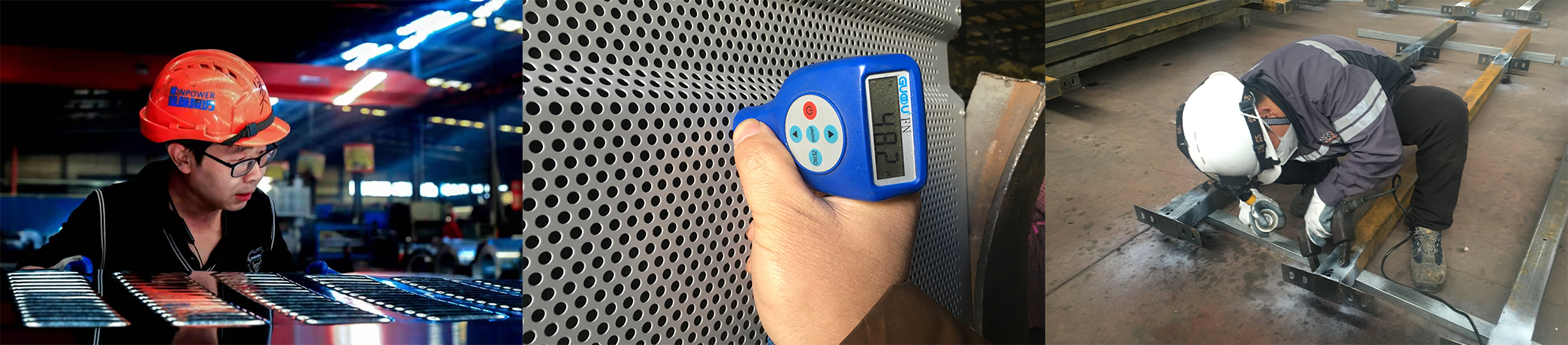
Polyester powder is electrostatically applied and then cured at high temperatures. This process provides excellent mechanical strength, adhesion, corrosion resistance, and aging resistance, while also being cost-effective. It is currently the most widely used solution.
For customers with special requirements, fluorocarbon coating can also be selected, offering higher color saturation and stronger weather resistance.
To ensure color consistency, the production process must strictly control furnace temperature stability (deviation ≤ 5°C), powder quality, and equipment operating parameters to avoid color differences.
V. Recommendations for Color Selection
Color selection should comprehensively consider multiple factors.
On one hand, the color should coordinate with the surrounding environment. Green is suitable for forest and mountainous areas, blue works well near water environments, and gray is ideal for industrial zones to reduce visual contrast and improve overall aesthetics.
On the other hand, safety factors should also be considered. Overly bright colors such as red and orange may distract drivers or train operators.
For special projects, customized color schemes can also be designed according to surrounding architectural styles to achieve a balance between functionality and landscape aesthetics.
Conclusion
The color of noise barriers can be fully customized. With standardized color systems such as RAL and mature electrostatic powder coating technology, most engineering color requirements can be effectively satisfied.
When selecting colors, it is recommended to consider three key principles: environmental coordination, safety and practicality, and professional recommendations.
If you need more detailed color matching solutions or customization services, please feel free to contact us at any time.