
 EN
EN
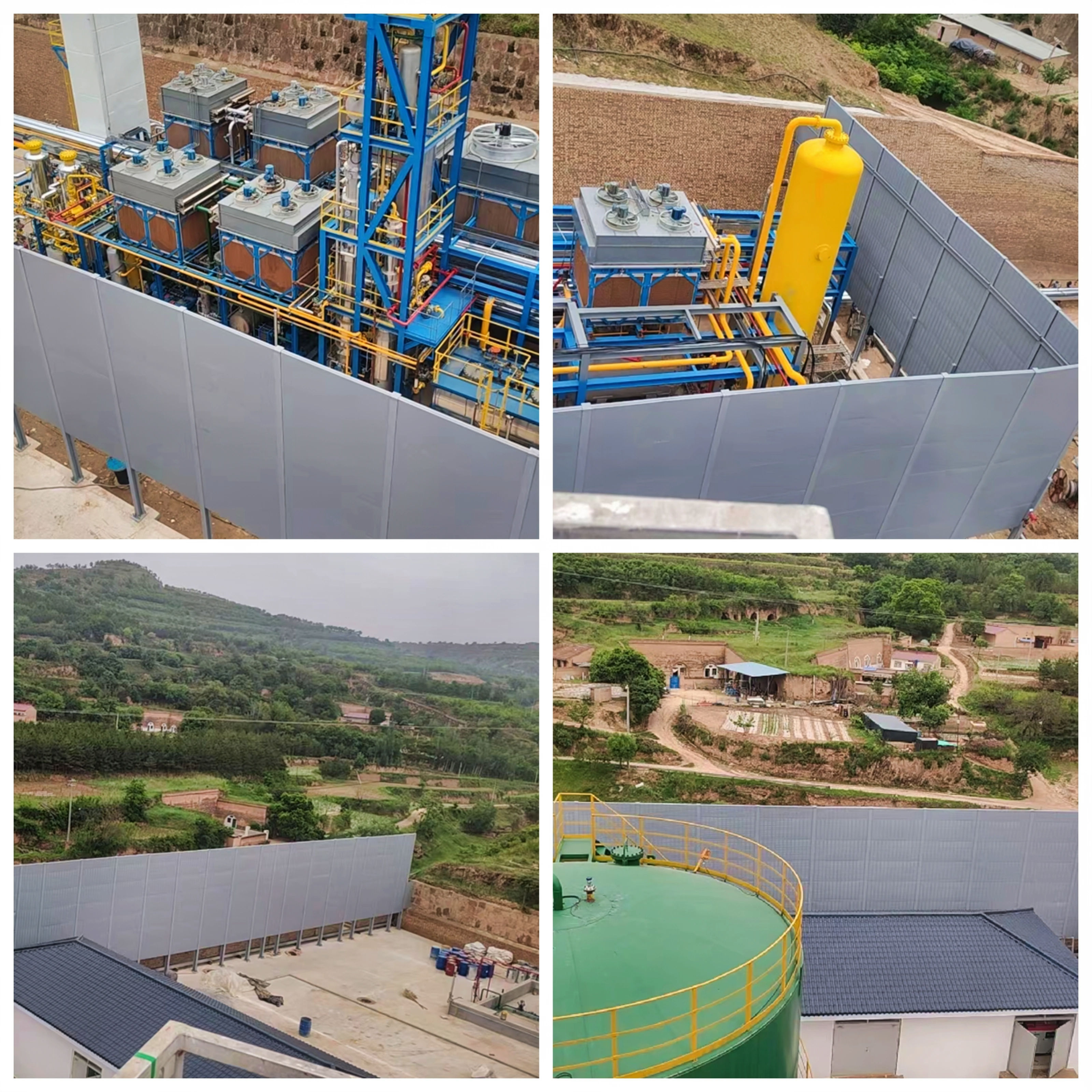
Industrial noise barriers, also known as acoustic barriers or sound barriers, are acoustic structures installed between a noise source and the area that requires protection (such as factory boundaries or worker operating zones). By physically blocking the transmission of sound, they provide a simple, cost-effective, and highly efficient noise control solution.
Core Noise Reduction Principles
Industrial noise barriers reduce noise through three primary physical mechanisms:
1. Blocking (Sound Insulation)
This is the most fundamental function of a noise barrier. Acting like a wall, it blocks the direct path of sound waves traveling from the source to the receiver. When sound waves strike the barrier, a portion of the sound energy is reflected back by the solid surface. In general, the greater the mass and rigidity of the barrier material, the better its sound insulation performance.
2. Absorption (Sound Absorption)
When sound waves hit the surface of the barrier, part of the sound energy is absorbed by porous or fibrous acoustic materials and converted into small amounts of heat energy, thereby reducing reflected noise. To enhance acoustic performance, modern barriers often adopt a sound-insulating and sound-absorbing composite structure, where absorbent materials are applied to one or both sides of a solid sound-insulation panel.
3. Diffraction Attenuation
Sound waves naturally bend around obstacles, a phenomenon known as diffraction. While a barrier cannot completely eliminate sound transmission, it can alter and extend the path that sound must travel from the source to the receiver. The longer the sound path, the more energy is dissipated during propagation, resulting in lower noise levels at the receiving point. Generally, taller barriers create longer diffraction paths and therefore provide greater noise reduction.
Main Types and Structures
Depending on their structure and materials, industrial noise barriers can be categorized as follows:
By Structure
Reflective Sound Insulation Barriers
Constructed primarily from dense materials such as steel panels or concrete panels, these barriers reduce noise mainly by reflecting sound energy.
Sound-Absorbing Composite Barriers
This is currently the most widely used and effective type. It combines sound-absorbing and sound-insulating materials, allowing part of the sound energy to be absorbed while the remainder is blocked or reflected. A typical composite structure consists of:
• Outer galvanized perforated steel panel (reflects high-frequency noise)
• Middle gradient acoustic wool layer (absorbs mid-frequency noise)
• Inner damping sound-insulation panel (blocks low-frequency noise)
By Application
• Factory Boundary Noise Barriers
Installed along industrial property boundaries to reduce the impact of factory noise on nearby residential areas and surrounding environments.
• Equipment Noise Control Barriers
Designed for specific high-noise equipment such as fans, compressors, generators, and other industrial machinery.
By Material
• Metal Noise Barriers
Typically manufactured from galvanized steel or aluminum panels, offering excellent durability and weather resistance.
• PC Sheet or Transparent Glass Noise Barriers
Provide transparency and natural light transmission, helping avoid the visual heaviness and enclosed feeling associated with solid barriers.
Key Design Considerations
An effective industrial noise barrier involves much more than simply erecting a wall. The following factors must be carefully considered:
• Height and Location
The noise reduction performance of a barrier is closely related to its height. As a general guideline, doubling the barrier height can reduce noise levels by approximately 6 dB. Barriers should also be positioned as close as possible to either the noise source or the receiver to maximize effectiveness.
• Materials and Structure
The barrier design should be selected according to the frequency characteristics of the noise source (low, medium, or high frequency). Low-frequency noise is particularly difficult to absorb using conventional materials and often requires specialized acoustic designs. Curved or cantilevered top sections can further reduce diffraction and improve overall noise attenuation.
• Environmental Adaptability
Industrial environments often involve harsh conditions such as high temperatures, humidity, dust, and corrosive substances. Therefore, barrier materials should offer excellent weather resistance, corrosion protection, and moisture resistance.
• Regulatory Compliance
The barrier must be designed to meet applicable environmental noise regulations, occupational health standards, and project-specific acoustic requirements.
Conclusion
Industrial noise barriers are a proven and highly effective noise control solution. By combining sound insulation, sound absorption, and diffraction attenuation principles with proper structural design, material selection, and installation practices, they can significantly reduce industrial noise, protect worker health, improve environmental quality, and help facilities comply with regulatory standards.