
 EN
EN
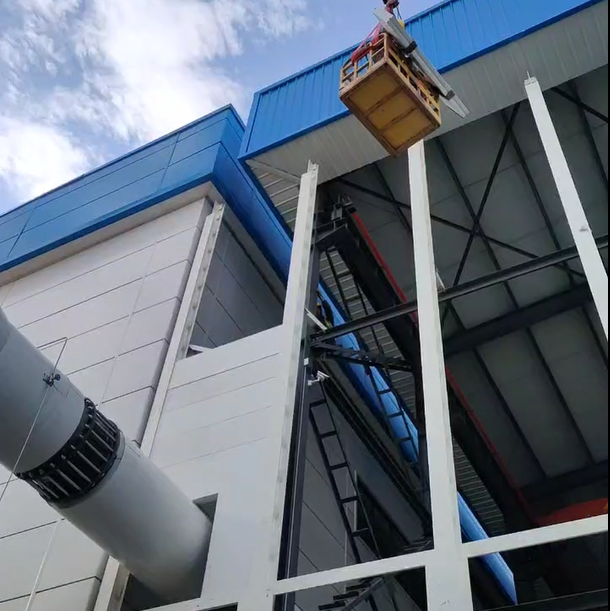
1. What Is an Industrial Noise Barrier?
An industrial noise barrier is essentially a specially designed wall used to “block sound.” It is installed between noisy industrial equipment and areas that need protection, such as offices, workspaces, or nearby residential communities. By creating a physical obstruction, the barrier prevents noise from traveling directly to surrounding areas, thereby reducing its impact on people and the environment.
In industrial facilities, equipment such as fans, air compressors, stamping machines, and cooling towers can generate significant noise during operation. If left uncontrolled, excessive noise can not only affect employee health and productivity but also cause facility boundary noise levels to exceed environmental regulations, potentially resulting in complaints or penalties. Industrial noise barriers are one of the most common and cost-effective solutions for addressing these issues.
2. How Does an Industrial Noise Barrier Reduce Noise?
Industrial noise barriers work through three primary mechanisms:
Sound Insulation
Like a solid wall, the barrier physically blocks sound waves, preventing most of the noise from passing directly through.
Sound Absorption
The surface of the barrier is often made of perforated metal panels, while the interior is filled with sound-absorbing materials such as rock wool or fiberglass. When sound waves enter these materials, part of the sound energy is converted into heat, reducing sound reflections.
Diffraction Attenuation
Some sound waves may travel over the top of the barrier. However, because the transmission path becomes longer, the sound energy gradually weakens before reaching the protected area.
By combining these three mechanisms, industrial noise barriers can typically reduce noise levels by 10–20 dB. Although this may seem modest, a reduction of this magnitude can make the perceived noise level more than half as loud to the human ear.
3. What Types of Industrial Noise Barriers Are Available?
Industrial noise barriers are available in various materials and configurations, including:
Metal Noise Barriers
Manufactured from galvanized steel or aluminum panels, these barriers offer high strength, durability, and weather resistance, making them the most widely used option in industrial applications.
Louvered Noise Barriers
Designed with ventilation openings, these barriers are ideal for equipment areas that require airflow and heat dissipation.
Transparent Noise Barriers
Made from polycarbonate (PC) sheets or acrylic panels, these barriers provide both noise reduction and visibility while allowing natural light to pass through.
Fully Enclosed Acoustic Enclosures
These structures completely surround noisy equipment and provide the highest level of noise reduction. They are commonly used for generators, compressors, and other high-noise machinery.
Based on installation location, industrial noise barriers can also be categorized as:
• Boundary Noise Barriers: Installed along the facility perimeter to prevent noise from spreading beyond the site.
• Equipment Noise Barriers: Installed close to specific noise sources for localized noise control.
• Indoor Partition Barriers: Used inside large workshops to separate areas with different noise levels.
4. What Are the Advantages of Industrial Noise Barriers?
Effective Noise Reduction
They help facilities meet environmental noise standards and avoid regulatory penalties.
Improved Working Environment
Lower noise levels create a more comfortable workplace and help reduce hearing damage, stress, and fatigue among employees.
Flexible Installation
Noise barriers can be customized to fit different site conditions and equipment layouts, including straight, angled, and curved designs.
Cost-Effective Solution
Compared with equipment replacement, process modifications, or facility relocation, industrial noise barriers require less investment and can be installed quickly.
Long Service Life
Constructed from durable and weather-resistant materials, industrial noise barriers require minimal maintenance and provide years of reliable performance.
5. Where Are Industrial Noise Barriers Used?
Industrial noise barriers are suitable for nearly any application involving high levels of noise, including:
Power Plants
Around cooling towers, steam turbines, transformers, and other major equipment.
Manufacturing Facilities
For stamping lines, forging operations, air compressors, industrial fans, and production machinery.
Mining Operations
Around crushers, screening equipment, and conveyor systems.
Chemical Plants
For large compressors, pumps, and process equipment.
Logistics Centers
At loading docks, truck parking areas, and freight handling zones.
Rooftop Mechanical Equipment
For cooling towers, HVAC systems, air-conditioning units, and other rooftop installations.
6. Key Considerations for Design and Installation
Several factors should be considered when designing an industrial noise barrier:
• Install the barrier as close as possible to the noise source or the protected area for maximum effectiveness.
• Ensure sufficient barrier height, as taller barriers generally provide greater noise reduction. However, structural requirements and wind loads must also be considered.
• Maintain proper sealing. Any gaps, openings, or penetrations can allow sound to leak through, reducing performance.
• Use corrosion-resistant materials, especially for outdoor installations where weather exposure is a concern.
7. Conclusion
Industrial noise barriers are among the most direct, practical, and cost-effective solutions for controlling industrial noise pollution. By combining sound insulation, sound absorption, and diffraction attenuation, they effectively reduce noise transmission and help facilities comply with environmental regulations while creating a quieter and safer working environment.
As noise control regulations continue to become more stringent, industrial noise barriers have become a standard component of many new industrial projects and facility upgrades. If your business is facing noise-related challenges, installing an industrial noise barrier may be one of the fastest and most economical ways to achieve significant noise reduction results.
Table of Contents
- 1. What Is an Industrial Noise Barrier?
- 2. How Does an Industrial Noise Barrier Reduce Noise?
- 3. What Types of Industrial Noise Barriers Are Available?
- 4. What Are the Advantages of Industrial Noise Barriers?
- 5. Where Are Industrial Noise Barriers Used?
- 6. Key Considerations for Design and Installation
- 7. Conclusion