
 EN

Roadside Noise Barriers for Homes: What Actually Cuts Traffic Noise
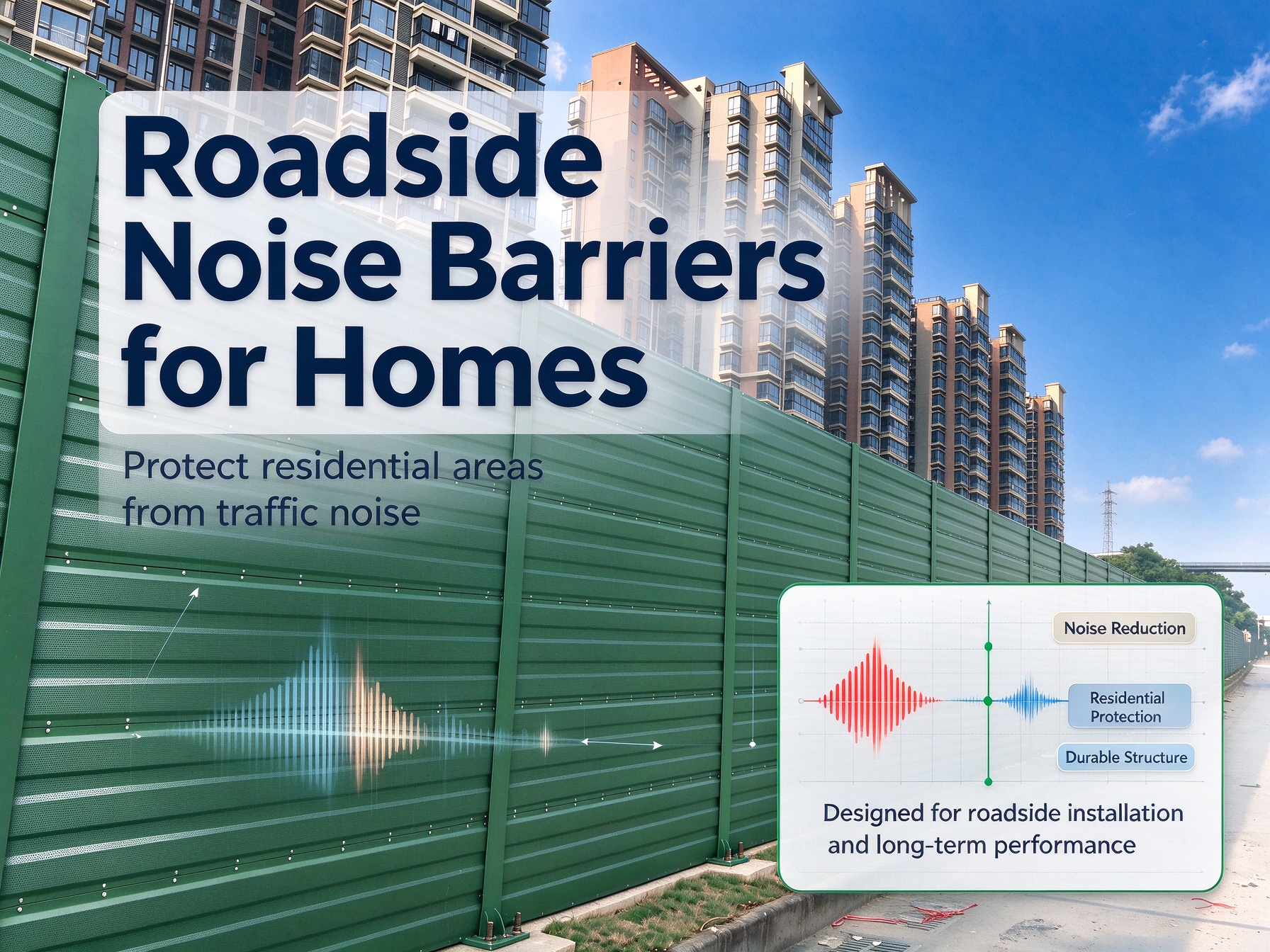
Roadside Noise Barriers for Homes: What Actually Cuts Traffic Noise
Anyone who lives beside a busy road hears the same thing: the noise is worst in the rooms facing the road, worst at the hours when traffic is heaviest, and worst in summer when the windows are open. The instinct is to look for a better panel. In practice the panel is rarely the deciding factor. What decides whether roadside noise barriers work at a particular house is the geometry between the road, the barrier and the window — and whether that geometry can be changed at all on the plot available.
Why Height and Distance Decide the Outcome
Traffic noise reaches a house by two routes. One is direct, in a straight line from the vehicle to the window. The other is indirect, bending over the top of any obstruction and reflecting off buildings and the road surface. Roadside noise barriers work by removing or lengthening the direct route, which is why their position matters more than their specification.
The barrier has to break the line of sight
If a driver's roof can be seen over the top of a fence from the window, the fence is doing almost nothing for that window. The useful test is not a drawing but a sightline: stand at the window, look toward the road, and note whether the barrier cuts the view of the carriageway. This is the single most practical check a householder can make, and it explains why two neighbours with identical fences can have completely different results.
Distance does the quietest work
Sound falls away with distance from the source, before any barrier is involved. Pushing roadside noise barriers a few metres further from the carriageway, or moving the house further back, changes the result more reliably than upgrading the panel from one material to another. On a narrow plot this option may not exist, which is why height and position become the only levers left.
What a short fence can and cannot do
A domestic fence at waist or chest height will not stop road noise reaching an upstairs window. It can soften the noise heard in a ground-floor room facing a shallow garden, and it can reduce the noise that arrives at a patio, but the improvement is modest and is easily lost if the fence has gaps at the base or between boards. Roadside noise barriers only behave as barriers when they are continuous, heavy enough to block transmission, and tall enough to interrupt the direct path.
Where a Barrier Belongs on a Residential Frontage
As close to the road as the boundary allows
Roadside noise barriers give the most benefit when they are near the source. A line of roadside noise barriers at the property line intercepts the sound before it spreads across the garden, while a barrier built against the house protects only the rooms behind it. Where the frontage is short, this usually means a single run parallel to the carriageway rather than a fence following the shape of the garden.
On an embankment or an existing wall
Many houses sit above the road on a bank or behind a retaining wall. In that case the wall or bank already does part of the work, and roadside noise barriers placed on top of it start from a raised base — the least costly height a householder will ever buy. This is one of the few situations where a modest addition produces a noticeable change, provided the barrier is seated on the structure rather than perched behind it with a gap.
Between the road and the house, not wrapped around the garden
A common mistake is to enclose the garden with a tall fence. This blocks the view, darkens the plot and does little for noise, because the sound arrives over the top from the same direction as before. Roadside noise barriers belong on the road side of the plot, in a line, and should not be extended around corners that face away from traffic.
Options on a Small Plot With an Existing Fence
Make the existing fence heavier and tighter
The least expensive improvement is usually to work with what is already there. Overlapping boards, closing the gaps, sealing the base with a gravel board and ensuring the panels are rigid all raise performance at low cost. A fence that rattles or flexes passes sound through the movement as well as the material.
Add an absorptive face
Where a barrier stands close to the house, a reflective face can bounce sound between the two and make the garden feel louder. An absorptive facing on the house side reduces that reflection. This matters most in narrow plots and where the barrier is tall relative to the distance behind it.
Where planting helps and where it is wishful thinking
Vegetation reduces noise only when it presents real depth and mass — several metres of dense evergreen, preferably raised on a bank. A single hedge, or a row of young trees, does not. Planting earns its place as screening and as a visual improvement behind roadside noise barriers, not as a substitute for them.
What Changes When the Whole Street Is Involved
A run of roadside noise barriers long enough to cover several properties performs better than a series of short ones, because sound travels around the ends of a short run as well as over the top. Where neighbours face the same road, a shared boundary treatment — even a modest one — usually gives each household more benefit than an individual tall fence, and it avoids the patchwork of heights that lets noise through the gaps between plots.
Judging a Quote
A quotation for roadside noise barriers is only meaningful if it states what the panel is expected to achieve and on what basis. Ask for measured performance data rather than a descriptive claim, and ask whether the figure refers to the panel alone or to the installed system, since posts, joints and base details all affect the result. A supplier who cannot separate those two numbers is not giving a specification.
Where the work is at the property boundary, it is also worth confirming what the local authority permits: height limits, sight lines at a junction, and any requirement affecting a highway verge all sit outside the supplier's control.
What to Expect Realistically
Roadside noise barriers change what is heard at a window; they do not make a busy road quiet. A well-placed barrier that breaks the sightline to the traffic will be clearly noticeable in the rooms it protects. Roadside noise barriers that leave the carriageway visible, or stop short of the house, will disappoint. The difference between those two outcomes is decided by layout and height long before a material is chosen, which is why the practical advice for a householder is to measure the sightline first and specify the panel second.
For the product side of the decision, our road noise barriers for homes page sets out the systems we supply, and the question of how tall a barrier needs to be is treated in detail in our guide on how tall a noise barrier should be. Where a scheme moves from a single house to a road project with drawings and clauses, the motorway and freeway noise barrier specification guide covers the tender side.