
 EN
EN

Bridge Noise Reduction Solutions: Types, Materials, and Applications
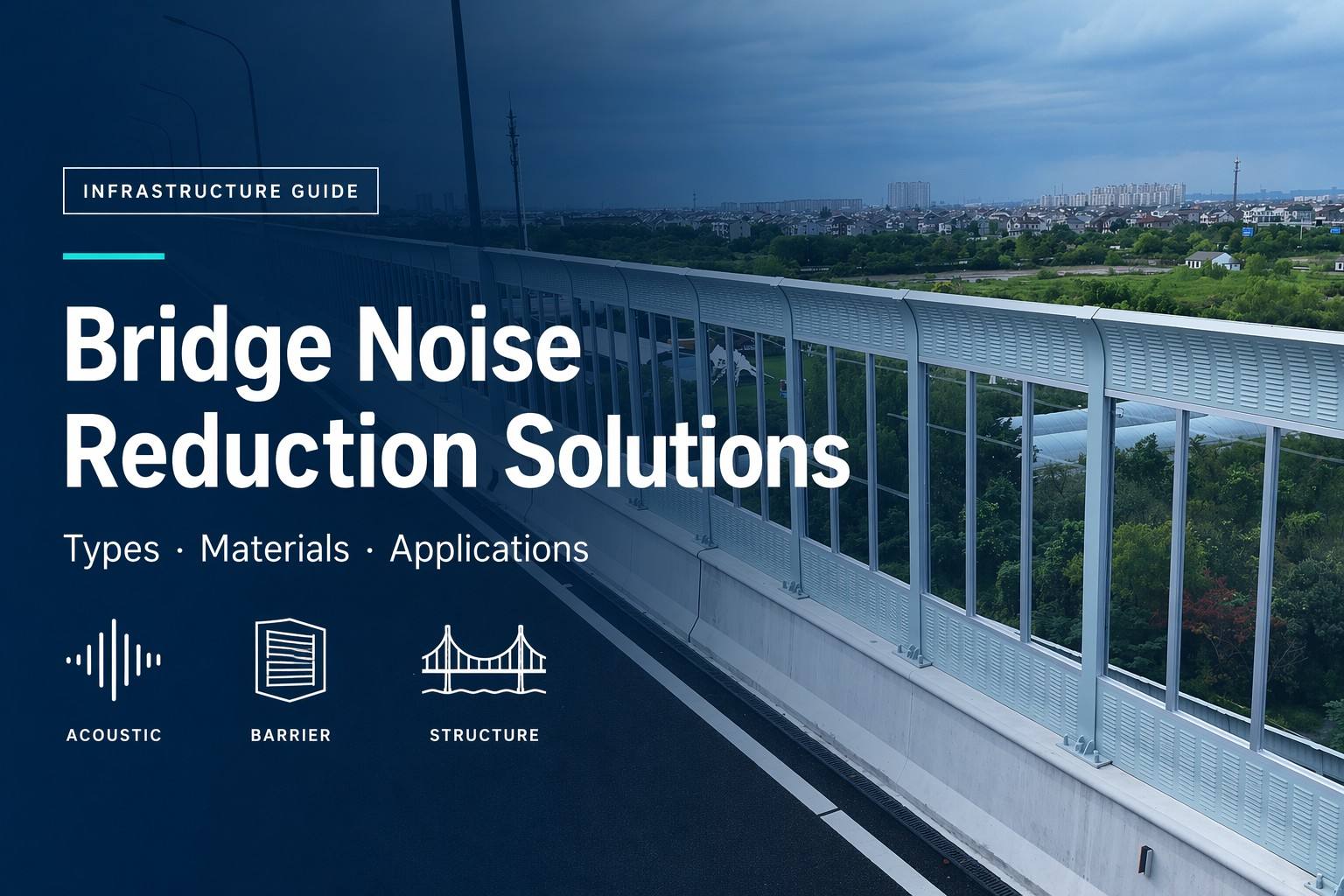
1.Main Types of Bridge Noise Reduction Solutions
According to the structural design and level of enclosure, bridge noise barrier solutions can generally be divided into the following three categories:
1.Vertical Noise Barriers
Vertical noise barriers are the most common and basic type of bridge sound insulation system. They typically consist of steel support columns and sound-absorbing/sound-insulating panels. The barriers are installed on both sides of the bridge deck, usually mounted on concrete parapets, with heights ranging from 2.0 m to 4.0 m.
Features:
• Simple structure
• Cost-effective solution
• Easy installation and maintenance
• Widely used on road bridges and viaducts
In urban rail transit projects, vertical noise barriers with heights between 2.15 m and 3.15 m are among the most common configurations.
Suitable Applications:
• Areas with moderate noise reduction requirements
• Bridges with limited load-bearing capacity where large enclosed structures are not feasible
2. Semi-Enclosed Noise Barriers
Semi-enclosed noise barriers add a roof section to the vertical barrier, forming a "∩"-shaped or curved enclosure that surrounds the noise source on three sides.
Features:
• Better noise reduction performance than vertical barriers
• Construction complexity and cost are between vertical and fully enclosed systems
• Effectively limits upward sound diffraction
Suitable Applications:
• Areas with higher noise sensitivity
• Locations requiring improved noise control without the need for a fully enclosed structure
• Projects where natural lighting and ventilation must be maintained
3. Fully Enclosed Noise Barriers (Noise Tunnels)
Fully enclosed noise barriers completely surround the bridge carriageway, creating an acoustic tunnel. This solution offers the highest level of noise mitigation among bridge noise barrier systems.
Features:
• Excellent sealing performance
• Large sound-blocking surface area
• Highly effective in preventing noise propagation
• Higher construction costs
• Requires additional consideration of bridge load capacity, wind loads, and snow loads
2. Guide to Noise Barrier Material Selection
The acoustic performance and service life of a noise barrier largely depend on the materials used. The most common options include metal noise barriers and transparent noise barriers.
Metal Noise Barriers
Metal barriers are typically manufactured using galvanized steel sheets or aluminum panels, with internal sound-absorbing materials such as rock wool or glass wool.
Key Advantages:
• High sound insulation performance: Weighted Sound Reduction Index (Rw) of 25–35 dB
• Excellent structural strength: Strong resistance to wind pressure and impact loads
• High fire resistance: Class A non-combustible rating
• Long service life: More than 15 years
• Flexible customization: Polyester powder coating available in various colors
Emerging Material: Aluminum Foam
With its unique microporous structure, aluminum foam can effectively block medium- and high-frequency noises such as tire-road friction and vehicle horns while simultaneously absorbing low-frequency noise generated by heavy-duty truck engines.
Advantages:
• Excellent broadband noise reduction performance
• Lightweight yet durable
• 100% recyclable material
• Supports sustainable and environmentally friendly infrastructure development
Transparent Noise Barriers
Transparent barriers are typically made from polycarbonate (PC) sheets or acrylic panels, offering light transmission rates exceeding 80%.
Key Advantages:
• Maintains visibility for drivers and passengers
• Preserves natural daylight for nearby residents
• Reduces the feeling of enclosure
• Harmonizes with surrounding landscapes
• Ideal for scenic routes and urban boulevards
Performance Parameters:
• Light transmission: Over 85%
• Enhanced weather resistance with UV protective coating
• Sound insulation performance: Approximately 25–28 dB
• High-quality PC panels can maintain over 80% transparency after 10 years of service
Selection Recommendations
Due to the significant wind loads experienced by bridges, metal noise barriers are often the preferred choice for bridge applications. For municipal roads near residential areas, a combination of transparent sections for daylighting and metal sections for superior sound insulation can provide an optimal balance.
Material selection should be evaluated based on five key factors:
1.Acoustic performance
2.Wind load resistance
3.Weather resistance
4.Installation precision
5.Maintenance costs
3. Hebei Jinbiao Bridge Noise Barrier Projects
Vietnam Bridge Microporous Metal Noise Barrier
• Height: 2 meters
• Material: Microporous metal panels
• Application: Traffic noise control for bridge infrastructure
Kuwait Bridge Acrylic Noise Barrier
• Material: Transparent acrylic panels
• Application: Noise mitigation while maintaining visibility and aesthetics
Singapore Bridge Louvered Metal Noise Barrier
• Material: Metal louver perforated panels
• Application: Urban bridge noise control with enhanced ventilation performance
4. Frequently Asked Questions
Q: How much noise can a bridge noise barrier reduce?
A: Noise reduction performance varies depending on the barrier type.
Vertical noise barriers typically reduce noise by 5–15 dB(A).
A 4-meter-high barrier generally achieves a reduction of 5–8 dB(A) in traffic noise.
Fully enclosed noise barriers provide significantly greater attenuation, potentially reducing traffic noise to levels comparable to normal conversation.
Q: What is the service life of a noise barrier?
A: Typical design life requirements are:
Foundation structure: Not less than 50 years
Supporting structure: Not less than 30 years
Barrier panels: Not less than 15 years
Q: Will a fully enclosed noise barrier affect ventilation and heat dissipation?
A: Yes, fully enclosed systems can impact ventilation. However, practical engineering solutions have been developed. For example, the Luoxi Bridge project in Guangzhou incorporated skylight openings by removing selected acrylic roof panels, allowing hot air to escape while maintaining acoustic performance.
Therefore, ventilation requirements should be carefully considered during the design phase.
Q: Can noise barriers be installed on existing bridges?
A: Yes. However, before installation, a structural assessment must be conducted to verify that the existing bridge can safely accommodate the additional loads, including wind loads, snow loads, and the weight of the noise barrier system.
5. Conclusion
Bridge noise control is a critical component of traffic noise management and plays an important role in improving urban living environments. From vertical and semi-enclosed systems to fully enclosed acoustic tunnels, and from metal panels to transparent materials, a wide range of solutions is available to meet diverse project requirements.
As the industry moves toward customized noise reduction strategies and precision acoustic engineering, while embracing sustainable and environmentally friendly materials, bridge noise barrier technology continues to evolve toward greater efficiency, enhanced aesthetics, and long-term sustainability.