
 EN
EN

Airport Fence Solution: To Secure Airport Perimeter Protection
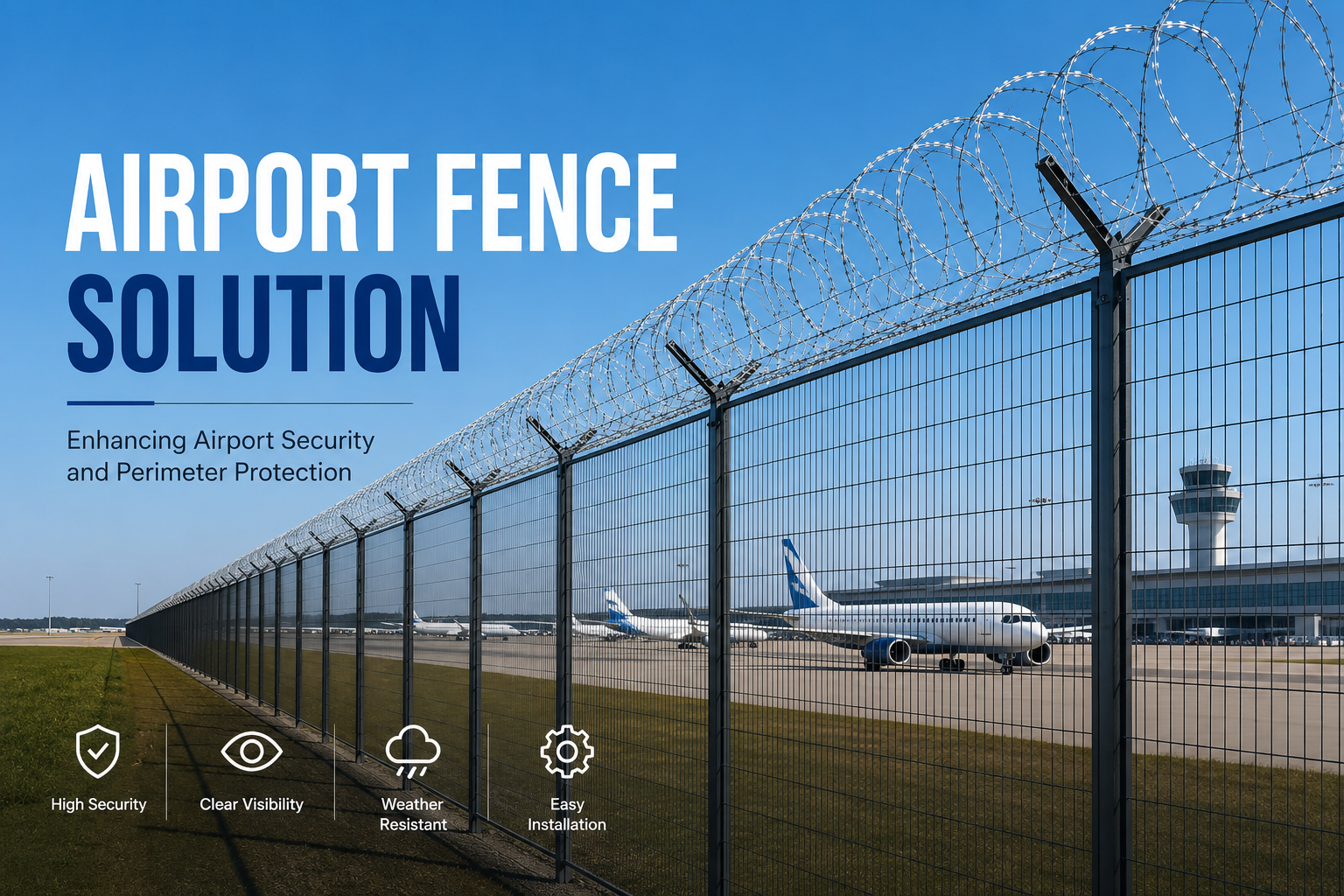
Why Airports Need Perimeter Fencing Systems
Airports typically cover vast areas, including runways, taxiways, terminals, cargo zones, maintenance facilities, fuel storage areas, and other operational sectors. Any unauthorized access can pose serious threats to airport operations and aviation safety.
A well-designed airport fencing system helps achieve the following objectives:
• Prevent unauthorized access to restricted airport areas
• Reduce the risks of theft, vandalism, and malicious intrusion
• Prevent wildlife from entering runway areas
• Enhance the overall security level of the airport
• Comply with civil aviation security regulations
• Protect critical aviation facilities and equipment
For modern airports, perimeter fencing is not merely a physical barrier but also an essential component of the overall security infrastructure.
Key Features of a High-Quality Airport Fence
High Security
Airport fencing must provide excellent resistance against climbing, cutting, and forced entry.
High-security welded wire mesh fences feature small mesh openings that make climbing extremely difficult while effectively resisting cutting tools. Combined with reinforced posts and high-strength fastening systems, the fence delivers enhanced perimeter protection.
Excellent Visibility
Compared with solid walls, airport fences must maintain clear visibility across the perimeter.
Open mesh structures provide several advantages:
• Enable security personnel to quickly detect suspicious activities
• Ensure unobstructed views for CCTV surveillance systems
• Improve perimeter patrol efficiency
• Minimize monitoring blind spots
As a result, high-visibility mesh fencing has become the preferred choice for airport perimeter security projects.
Outstanding Weather Resistance
Airport fences are exposed to harsh outdoor conditions throughout the year, including:
• Strong winds
• Heavy rainfall
• UV radiation
• High humidity
• Coastal salt corrosion
To ensure long-term durability, airport fencing is typically manufactured from hot-dip galvanized steel and finished with polyester powder coating. This combination provides excellent corrosion resistance, prevents fading and rusting, and significantly reduces maintenance costs.
Compatibility with Smart Security Systems
Modern airports increasingly rely on intelligent security management systems.
Airport fences should be capable of integrating with:
• CCTV surveillance systems
• Perimeter alarm systems
• Vibration detection systems
• Infrared detection systems
• Access control systems
• Centralized security management platforms
By integrating these technologies, airports can achieve comprehensive 24/7 security monitoring.
Common Types of Airport Fencing
358 High-Security Fence
The 358 security fence is one of the most widely used high-security fencing solutions for airports worldwide.
With a mesh opening of 76.2 mm × 12.7 mm, it offers outstanding anti-climb, anti-cut, and anti-intrusion performance, earning the reputation of a “prison-grade security fence.”
Key advantages include:
• Exceptional anti-climb performance
• Superior resistance to cutting
• Excellent visibility
• Robust and durable construction
• Long service life
Typical applications include:
• International airports
• Military airbases
• Air cargo terminals
• High-security restricted areas
V-Bend Airport Fence
V-bend fencing incorporates reinforcing folds within the mesh panel to increase rigidity and wind resistance.
Key features include:
• Stable structure
• Easy installation
• Cost-effective solution
• Long service life
It is particularly suitable for:
• Regional airports
• General aviation airports
• Airport service and utility areas
Double Wire Fence
Double wire fencing consists of twin horizontal wires welded to a single vertical wire, creating a stronger and more rigid structure.
Its benefits include:
• High impact resistance
• Excellent stability
• Clean and attractive appearance
• Low maintenance requirements
Common applications include airport parking areas, logistics zones, and maintenance facilities.
Additional Security Enhancements for Airport Fencing
To further improve airport perimeter security, fencing systems are often combined with additional protective measures.
Razor Wire or Barbed Wire
Installing razor wire or barbed wire on top of the fence significantly increases climbing difficulty and serves as a strong visual deterrent to potential intruders.
Perimeter Intrusion Detection Systems
By installing vibration sensors or electronic detection devices, security personnel can monitor:
• Fence cutting attempts
• Climbing activities
• Unauthorized contact with the fence
When abnormal activity is detected, the system immediately sends alerts to the airport security control center.
Video Surveillance Systems
High-definition cameras installed along the perimeter provide continuous real-time monitoring.
When combined with intelligent video analytics, the system can automatically identify suspicious individuals, vehicles, and unusual activities, greatly improving security efficiency.
Intelligent Access Control Systems
Airport entrances and exits are commonly equipped with:
• Automatic sliding gates
• Barrier gates
• License plate recognition systems
• Biometric identification systems
• IC card access control systems
These technologies ensure that the movement of personnel and vehicles remains controlled, monitored, and traceable.
Key Considerations When Selecting an Airport Fence Solution
When choosing an airport perimeter fencing system, several important factors should be considered:
Security Requirements
For international airports and military facilities, 358 high-security fencing combined with razor wire and electronic intrusion detection systems is highly recommended.
Fence Height
Common airport fence heights include 2.4 m, 2.7 m, 3.0 m, and 3.6 m. Higher-security areas may require additional height depending on operational requirements.
Environmental Conditions
For coastal airports, corrosion resistance should be a priority. Hot-dip galvanized fencing with a high-adhesion powder-coated finish is recommended.
Maintenance Costs
High-quality anti-corrosion treatments can significantly reduce long-term maintenance expenses and improve return on investment.
Project Budget
Different fencing systems vary in terms of security performance and cost. The most suitable solution should be selected according to the specific needs and budget of the project.
Conclusion
Airport fencing is far more than a simple boundary barrier—it is a critical component of modern airport security infrastructure. By utilizing professional solutions such as 358 high-security fences, V-bend fences, or double wire fences, and integrating them with surveillance, alarm, and access control systems, airports can establish a comprehensive and highly effective perimeter protection network.
For airport authorities, EPC contractors, and airport operators, investing in a reliable airport fence solution not only enhances overall security but also ensures compliance with increasingly stringent aviation security standards, providing long-term protection for safe and efficient airport operations.