
 EN
EN
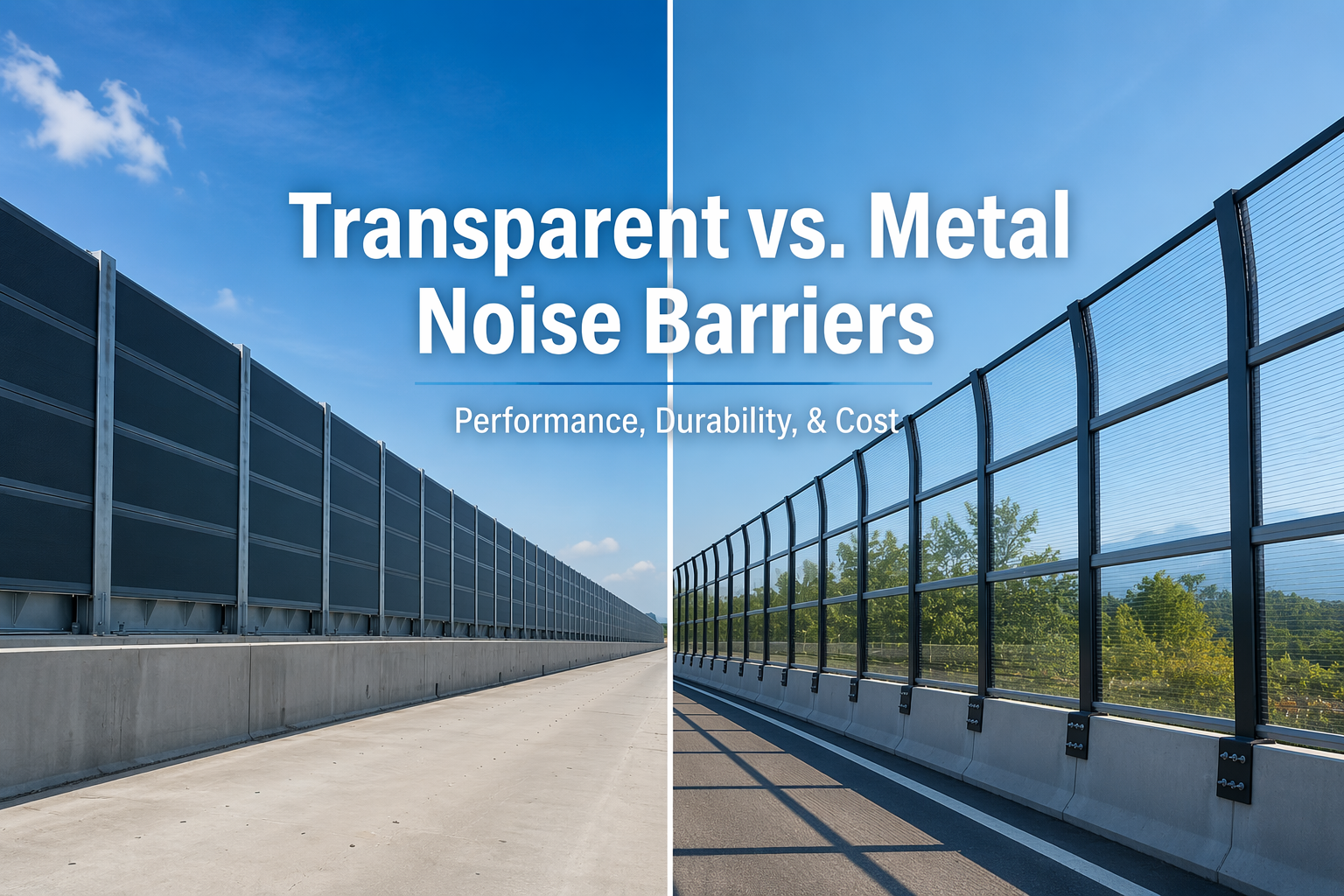
Introduction to Traffic Noise Control Solutions
With the continuous development of highways, railways, bridges, and urban expressways, traffic noise has become a growing environmental concern. To improve the acoustic environment for nearby communities, various traffic noise control solutions have been widely adopted.
Among them, Transparent Noise Barriers and Metal Noise Barriers are the two most commonly used systems for highway and railway noise reduction projects.
In this guide, we compare their features, performance, cost, and applications to help you choose the right acoustic barrier solution for your project.
What Is a Transparent Noise Barrier?
A Transparent Noise Barrier is a sound insulation system manufactured from transparent materials such as:
• Polycarbonate (PC) Panels
• Acrylic (PMMA) Sheets
• Laminated Safety Glass
These materials provide effective noise reduction while maintaining visibility and natural light transmission.
Benefits of Transparent Noise Barriers
• High transparency (up to 90% light transmission)
• Preserves scenic views
• Modern architectural appearance
• Lightweight structure
• Suitable for urban environments
• Can be combined with metal acoustic panels
Common Applications of Transparent Noise Barriers
• Urban Expressways
• Bridge Noise Barrier Projects
• Residential Areas
• Schools and Hospitals
• Scenic Roads
• Commercial Districts
What Is a Metal Noise Barrier?
A Metal Noise Barrier is typically constructed from galvanized steel, aluminum, or aluminum alloy panels.
Most systems incorporate perforated sound-absorbing surfaces combined with internal insulation materials such as rock wool or fiberglass wool.
Advantages of Metal Noise Barriers
• Excellent sound absorption performance
• High structural strength
• Superior wind resistance
• Long service life
• Cost-effective solution
Common Applications of Metal Noise Barriers
• Highway Noise Barrier Projects
• Railway Noise Barriers
• Industrial Parks
• Logistics Centers
• Port Facilities
• Large Infrastructure Projects
Transparent Noise Barrier vs. Metal Noise Barrier
Appearance and Visual Impact
| Feature | Transparent Noise Barrier | Metal Noise Barrier |
| Visibility | Excellent | Moderate |
| Aesthetic Appeal | Modern and Open | Functional and Durable |
| Impact on Landscape | Minimal | Partial Visual Obstruction |
Noise Reduction Performance
Transparent Noise Barrier Performance
• Noise reduction: 10–15 dB
• Primarily provides sound insulation
• Limited sound absorption capability
Metal Noise Barrier Performance
• Noise reduction: 15–25 dB
• Combines sound insulation and sound absorption
• Better overall acoustic performance
For projects requiring maximum traffic noise reduction, metal barriers generally outperform transparent systems.
Durability and Structural Strength
Transparent PC Noise Barrier
Advantages
• High impact resistance
• Lightweight
• Shatter-resistant
Limitations
• Surface scratching may occur
• Long-term UV exposure may cause aging
Metal Acoustic Barrier
Advantages
• Excellent structural stability
• Strong wind load resistance
• Superior weather resistance
Limitations
• Requires anti-corrosion protection in aggressive environments
For bridge and elevated roadway projects exposed to strong winds, metal barriers often provide better long-term performance.
Maintenance Requirements
Transparent Sound Barrier Maintenance
• Requires regular cleaning
• More susceptible to dust and water stains
• Higher maintenance frequency
Metal Noise Barrier Maintenance
• Low maintenance requirements
• Durable surface finish
• Lower long-term maintenance costs
Cost Comparison
Generally:
Transparent Noise Barrier Cost > Metal Noise Barrier Cost
• Factors affecting transparent barrier pricing include:
• Higher material costs
• More complex fabrication
• Greater installation precision
For large-scale highway noise barrier projects, metal barriers are often the most economical option.
How to Choose the Right Noise Barrier System
Choose a Transparent Noise Barrier If:
• Visual appearance is important
• Natural lighting is required
• The project is located in an urban environment
• Scenic views must be preserved
Choose a Metal Noise Barrier If:
• Maximum noise reduction is required
• Budget control is a priority
• High wind resistance is needed
• Long-term durability is essential
Composite Noise Barrier: Combining the Best of Both Systems
A growing trend in modern infrastructure projects is the use of Composite Noise Barriers.
Typical Composite Noise Barrier Structure
• Lower Section: Metal Sound-Absorbing Panels
• Upper Section: Transparent PC Panels
Advantages of Composite Noise Barriers
• Excellent acoustic performance
• Improved visibility
• Attractive appearance
• Optimized project budget
This design is widely used for:
• Urban Highway Noise Barriers
• Elevated Road Projects
• Bridge Acoustic Barrier Systems
• Railway Noise Control Projects
Why Composite Noise Barriers Are Becoming the Industry Standard
Modern transportation projects often require a balance between:
• Noise Reduction Performance
• Visual Aesthetics
• Safety
• Cost Efficiency
As a result, composite systems are increasingly becoming the preferred choice for engineers, contractors, and government agencies worldwide.
Conclusion: Transparent vs. Metal Noise Barrier
Both Transparent Noise Barriers and Metal Noise Barriers play important roles in modern traffic noise control projects.
If aesthetics, transparency, and visibility are your priorities, transparent barriers are an excellent solution.
If you require superior acoustic performance, durability, and cost-effectiveness, metal barriers are often the better choice.
For many highway, bridge, and railway projects, a Composite Noise Barrier System offers the ideal balance of performance, appearance, and investment value.
Table of Contents
- Introduction to Traffic Noise Control Solutions
- What Is a Transparent Noise Barrier?
- Benefits of Transparent Noise Barriers
- Common Applications of Transparent Noise Barriers
- What Is a Metal Noise Barrier?
- Advantages of Metal Noise Barriers
- Common Applications of Metal Noise Barriers
- How to Choose the Right Noise Barrier System
- Why Composite Noise Barriers Are Becoming the Industry Standard
- Conclusion: Transparent vs. Metal Noise Barrier