
Reliable supplier of highway noise absorbing fences, traffic sound barriers, and acoustic panels. Our soundproof wall systems provide effective noise reduction for roads, construction sites, and industrial projects with durable and customizable solutions.
A noise absorbing fence differs from a plain reflective wall in one respect that decides how a scheme performs: it takes sound in at the face instead of bouncing it back. On a road with buildings on both sides, a reflective barrier can move the problem across the carriageway rather than removing it. A noise absorbing fence uses a perforated or shutter face over an absorptive core, so the energy that reaches the barrier is dissipated inside the panel. Hebei Jinbiao supplies these panels for highways, construction sites and industrial plant.
Absorption against reflection
Two numbers are usually quoted for a noise absorbing fence. The first is the acoustic reduction across the panel, expressed as Rw, which describes how much sound the barrier stops. The second is NRC, the noise reduction coefficient, which describes how much sound the face absorbs rather than reflects. A panel with a high Rw but a low NRC still works as a barrier, but it will reflect energy back into the road corridor. For a noise absorbing fence the two are specified together, and the panels supplied here are rated at Rw 30 dB or better with an NRC of 0.84 or better.
Panel construction
• Metal sheet panels: height 0.5 m, 1.0 m, 2.0 m, 2.5 m, 3.0 m, 4.0 m
• Panel thickness: 80 mm, 100 mm, 120 mm
• Facing sheet thickness: 1.0 mm to 1.5 mm
• Face type: shutter or perforated
• Panel length: up to 4.0 m
• Transparent panels: PC or PMMA, 8 mm, 10 mm, 12 mm or 15 mm, light transmittance of 80 percent or more
• Overall barrier height: 3.0 m as standard, with 2.0 m, 2.5 m and 4.0 m available
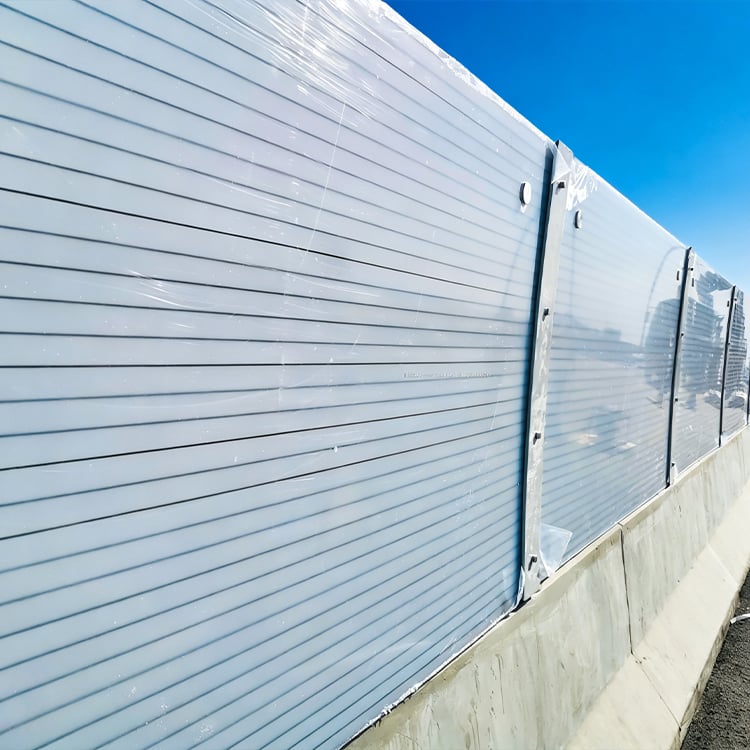
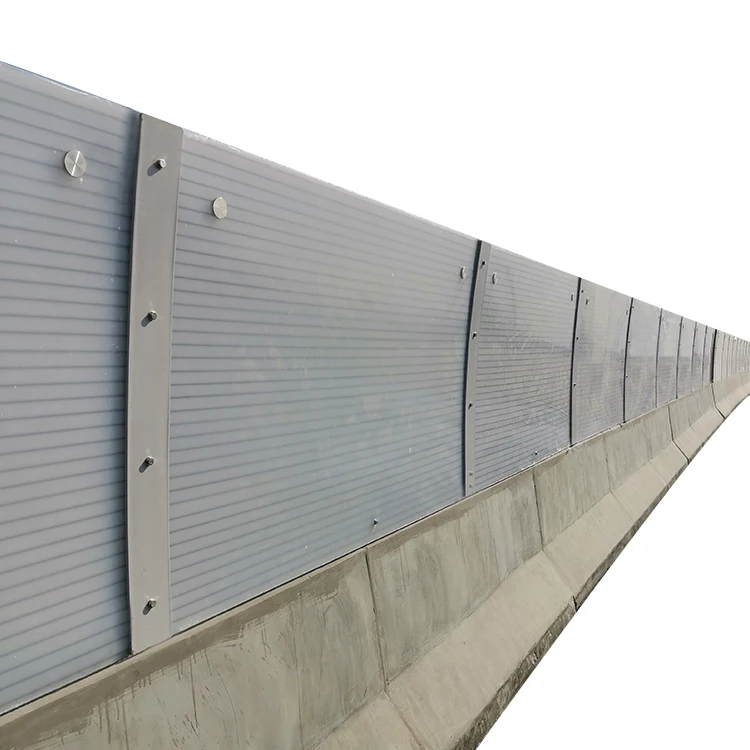
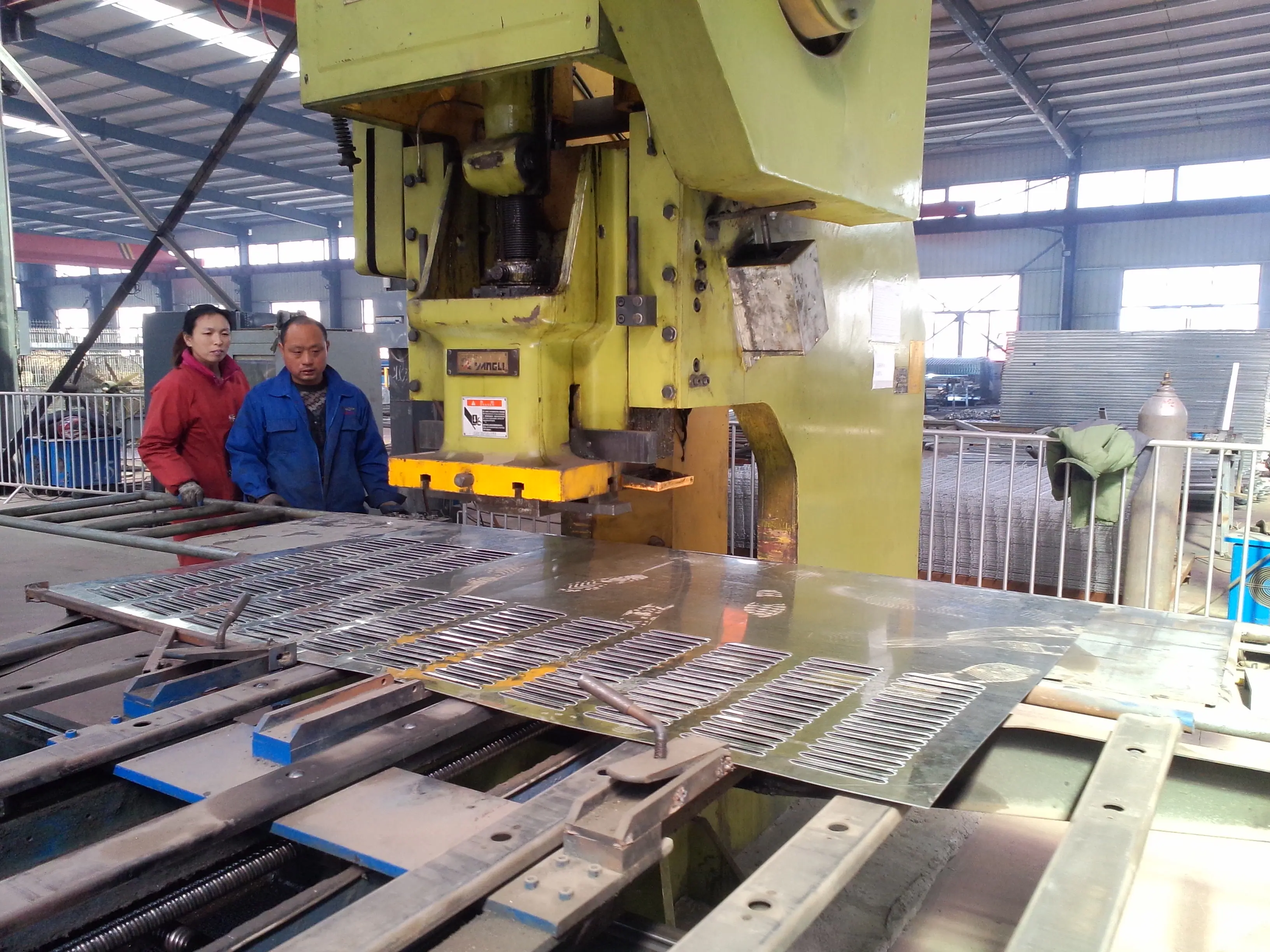
The perforated face is not decorative. The hole pattern and the cavity behind it are what allow sound to enter the panel and be absorbed, so the perforation ratio and the infill are specified together. A shutter face works on the same principle with a louvred profile, and is often chosen where a site wants a more solid appearance at eye level.
When transparency is combined
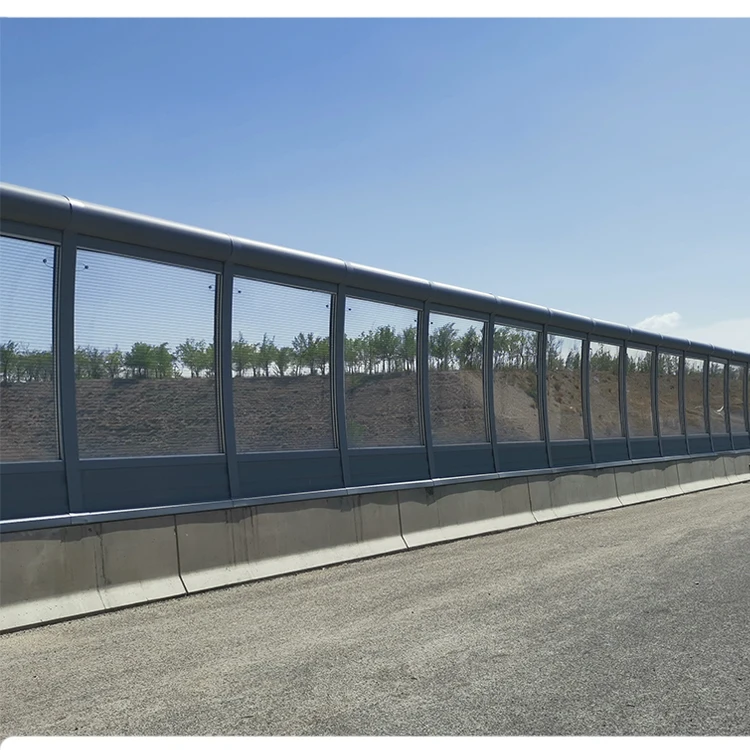
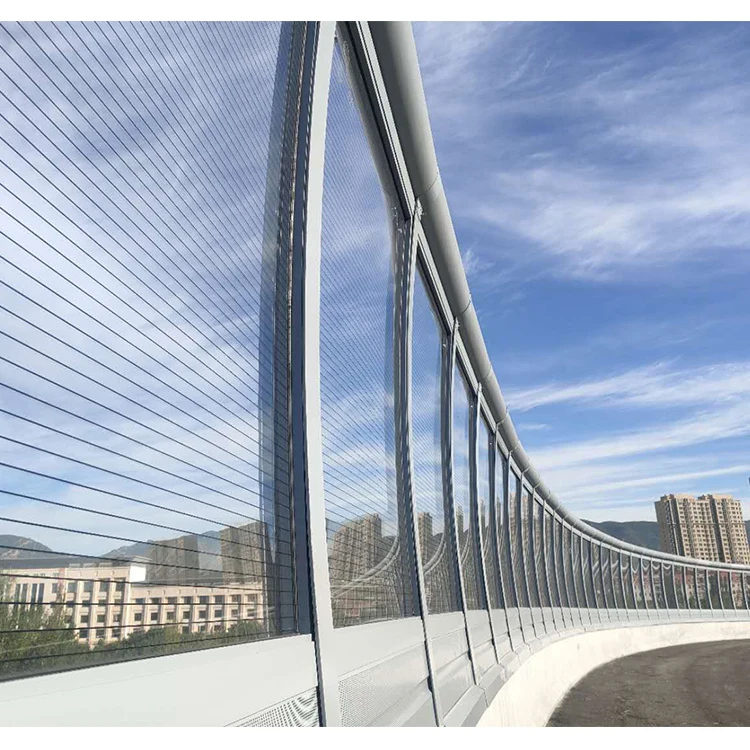
Many schemes use a noise absorbing fence for the lower section and a transparent panel above, so that the barrier reaches the height needed for attenuation without cutting daylight from the properties behind it. The transparent element is produced in PC or PMMA at 8 mm to 15 mm with light transmittance of 80 percent or more, and sits in the same post line as the metal panels.
Posts, height and the sightline
A noise absorbing fence only attenuates if it interrupts the line of sight between the traffic and the receiver. The height needed follows from the distance to the receiver, the receiver height and the ground profile, not from a standard panel size. The 3.0 m overall height quoted above is a common starting point, and the actual height is confirmed against a section drawing. Panels run between H-section or I-section posts set in concrete, and on a bridge deck the same posts are bolted through a base plate sized for wind load.
Site and installation conditions
Construction sites and temporary works use the same noise absorbing fence panel families on a lighter post line, because the requirement there is usually to reduce noise at the nearest boundary for the duration of the works rather than for the life of the road. Industrial plant uses the absorbing face where equipment noise has to be contained inside the site boundary, and where a reflective wall would send it to a neighbouring property.
Typical applications
• Highway and expressway edge barriers
• Urban viaduct and overpass parapets
• Construction site and temporary works boundary
• Industrial plant and equipment enclosure
• Rail corridor and depot boundary
What a quotation needs
The run length, the required height, the split between absorbing metal panels and transparent panels, whether the barrier sits on a verge or a deck, and the acoustic target for the receiver. Where a consultant has already set an Rw or NRC figure, the panel build is selected to meet it rather than the other way round.
Acoustic fencing acrylic noise barriers galvanized sheet sound barriers


| METAL SHEET | ||||
| PANEL HEIGHT | PANEL LEHGTH | SHEET THICKNESS | SHEET THICKNESS | PANEL TYPE |
|
0.5m 1.0m |
2.0m 2.5m 3.0m 4.0m |
80mm 100mm 120mm |
1.0-1.5mm | shutter or perforated |
| PC/PMMA SHEET | ||||
| PANEL | HEIGHT | SHEET THINCKNESS | LIGHT TRANSMITTANCE | |
|
0.5m 1.0m 1.5m |
2.0m 2.5m 3.0m 4.0m |
8mm 10mm 12mm 15mm |
≥80% | |
| NOISE BARRIER | ||||
| TOTAL HEIGHT | LENGTH | RW | NRC | |
| 3.0m as standard |
2.0m 2.5m 3.0m 4.0m |
≥30dB | ≥0.84 | |


Contact jinbiao company supplier.




 EN