
 EN
EN

Louver Noise Barrier: An Efficient Solution for Industrial and Traffic Noise Control
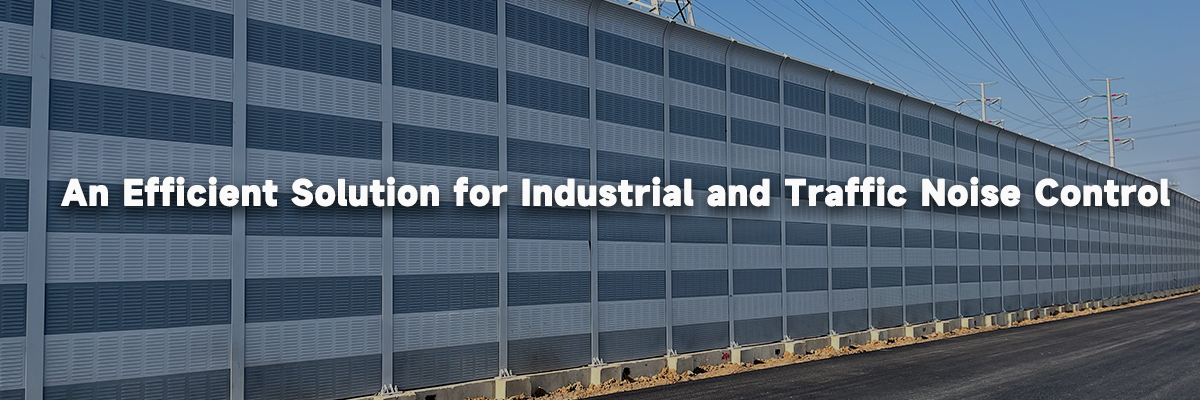
As urbanization and industrial activities continue to grow, noise pollution has become a major environmental concern. Whether it is traffic noise from highways and railways or mechanical noise from industrial facilities, effective noise control solutions are essential.
The Louver Noise Barrier has emerged as a highly efficient and practical solution, combining sound insulation with ventilation performance. It is widely used in areas where both noise reduction and airflow are required.
What is a Louver Noise Barrier?
A Louver Noise Barrier is a type of acoustic barrier designed with angled slats (louvers) that allow air to pass through while reducing noise transmission. Unlike fully enclosed systems, this design ensures proper ventilation, making it ideal for equipment and facilities that generate heat.
The structure typically consists of:
Metal louver panels (galvanized steel or aluminum)
Internal sound-absorbing materials (glass wool or rock wool)
Supporting steel framework
Key Features and Benefits
✅ Effective Noise Reduction
Louver noise barriers can reduce noise levels by 15-25 dB, depending on design and installation. The angled structure helps block direct sound paths while absorbing noise energy.
✅ Excellent Ventilation Performance
The louver design allows continuous airflow, preventing heat buildup in machinery and equipment areas. This is especially important for:
Cooling systems
Generators
Industrial machinery
✅ Durable and Weather Resistant
Corrosion-resistant materials
Suitable for outdoor environments
Long service life (15–25 years)
✅ Flexible and Customizable
Available in various sizes and angles
Can be designed for different airflow requirements
Suitable for both partial and full enclosure systems
✅ Easy Installation
Modular panels enable quick assembly and reduce installation time, making it ideal for large-scale projects.
Applications of Louver Noise Barriers
Louver Noise Barriers are widely used in both industrial and infrastructure environments:
✔Industrial Facilities
Used to control noise from heavy machinery, compressors, and production equipment while maintaining ventilation.
✔Equipment Enclosures
Ideal for generators, cooling towers, and HVAC systems where airflow is essential.
✔ Transportation Infrastructure
Applied along highways, bridges, and railways where partial ventilation is needed.
✔ Commercial Buildings
Commonly installed on rooftops or around mechanical systems to reduce noise impact on surrounding areas.